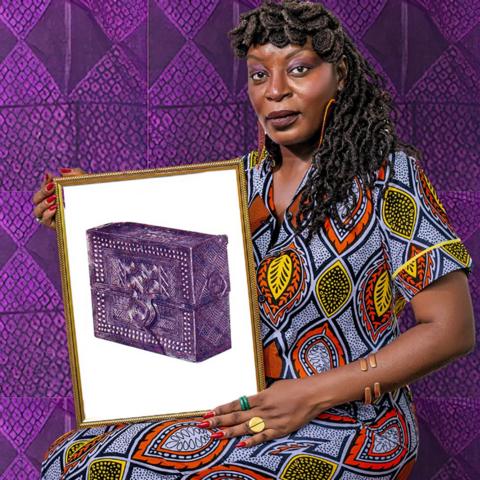
But, says Yonga, "there's a resurgence, a need and a hunger to connect with our cultural heritage - and reclaim who we are, whether through fashion, music or academic studies".
"We had our own language of love, of beauty," she says. "We had ways that we took care of our health and our environment. We had prosperity, union, respect, intellect."
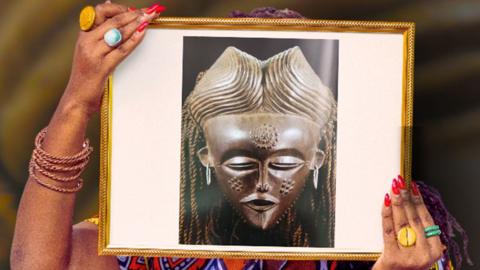
A total of 50 objects have been posted on social media - alongside information about their significance and purpose that shows that women were often at the heart of a society's belief systems and understanding of the natural world.
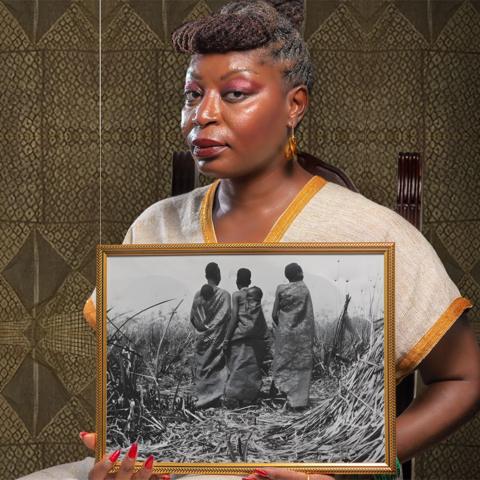
The images of the objects are presented inside a frame - playing on the idea that a surround can influence how you look at and perceive a picture. In the same way that British colonialism distorted Zambian histories - through the systematic silencing and destruction of local wisdom and practices.
The Frame project is using social media to push back against the still-common idea that African societies did not have their own knowledge systems.
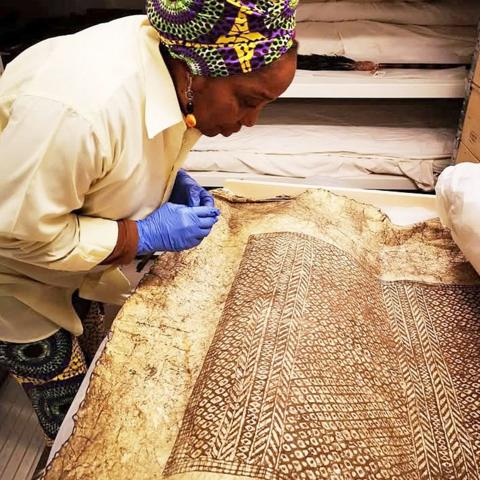
The objects were mostly collected during the colonial era and kept in storage in museums all over the world, including Sweden - where the journey for this current social media project began in 2019.
Yonga was visiting the capital, Stockholm, and a friend suggested that she meet Michael Barrett, one of the curators of the National Museums of World Cultures in Sweden.
She did - and when he asked her what country she was from, Yonga was surprised to hear him say that the museum had a lot of Zambian artefacts.
"It really blew my mind, so I asked: 'How come a country that did not have a colonial past in Zambia had so many artefacts from Zambia in its collection?'"
In the 19th and early 20th Centuries Swedish explorers, ethnographers and botanists would pay to travel on British ships to Cape Town and then make their way inland by rail and foot.
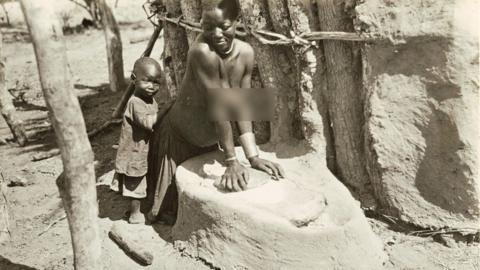
There are close to 650 Zambian cultural objects in the museum, collected over the course of a century - as well as about 300 historical photographs.