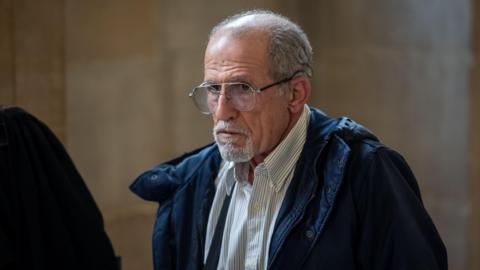
However, Khedache – who is now disabled, deaf and mute – has denied he was the ringleader. Although he admitted he was one of the two who went into Kardashian's room, pointed a gun at her and tied her up, he said he was never violent, "least of all with a woman".
His lawyers urged the jury to bear in mind his health condition and said that there was no risk of him reoffending. "At his age, prison time means a life sentence," lawyer Frank Berton said.
Abbas, who has Parkinson's disease and recently underwent heart surgery, told the jury on Friday morning that regretted his actions. "I'm sorry for what I was capable of doing," he said.
Among the other defendants was a man who worked as a driver for the Kardashian family. He denies providing information on their movements to the robbers and another man who prosecutors say was the getaway driver.
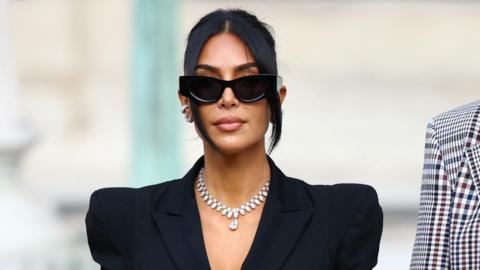
Last week, during an emotional five-hour testimony delivered through an interpreter, Kim Kardashian shared her traumatic memories of that night.
She was composed but at times struggled to fight back tears as she recalled the moment she feared the robbers would sexually assault her.
"I don't wish that kind of terror on anyone - to think you could be killed or raped... I wouldn't wish that on my worst enemy," the 44-year-old said, standing metres away from the defendants and dabbing her eyes with a tissue.
Kardashian also said among the jewellery taken from her was a watch that her late father had gifted her. "I can't get that back, it wasn't just jewellery... someone took away my memories," she stated.
When the court president, David De Pas, read out a letter written of apology written by Khedache, Kardashian said that she forgave him. However, she said it could not erase the trauma she had experienced.
Night receptionist Abderrahmane Ouatiki, the other plaintiff in the case, was present in court throughout the trial. Since the heist, the Algerian former PhD student has experienced PTSD, quit his studies and left France.
In his closing arguments, his lawyer said that while it was "harder to be a victim when one is anonymous and poor" and that "not everyone can afford to be surrounded by bodyguards to sleep better", he believed justice could finally "restore the balance".