
Wubi News

These men put off doctor's visits again and again. Then came a tipping point

2025-04-21 09:00:07
Men go to the GP less than women and are less likely to be registered at a dental practice or use a pharmacy
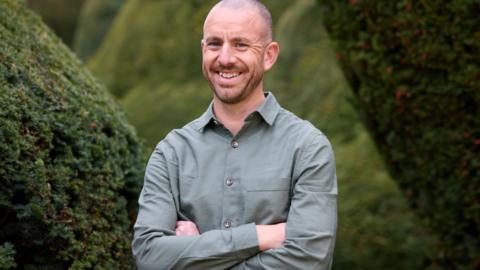
"I'm really stubborn when it comes down to going to the doctors," Dan Somers says

Kevin McMullan says he's learned from working for men's mental health charity ManHealth that men want to solve their own problems. He says he struggled with his mental health for years before he finally got help.

"You want to fix it yourself. Men are inherent problem-solvers and how you are feeling is a problem in the same way that having a flat tyre is a problem," says Kevin, 44, from Sedgefield in County Durham.

This is something that the Health Insights Survey indicates, too. The data suggests that when people were unable to contact their GP practice, men were significantly more likely than women to report "self-managing" their condition, while women were more likely than men to go to a pharmacy or call 111.

"Many men feel that help-seeking threatens their sense of independence or competence," Prof Galdas says.
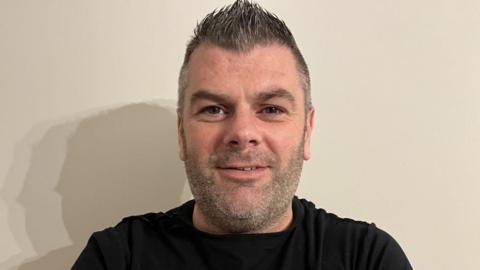

Kevin McMullan says many men try solve their own mental health problems

Prof Galdas points to other factors deterring men from going to the doctors, like appointment systems that don't fit around their working patterns.

Services also rely on talking openly about problems, he suggests, which doesn't reflect how men speak about health concerns - and there are no fixed check-ups targeting younger men.

Women, in contrast, are "sort of forced to engage in the health system" because they might seek appointments related to menstruation, contraception, cervical screenings or pregnancy, says Seb Pillon, a GP in Bolton.

And they're largely in control of organising their family's healthcare, too. For example, roughly 90% of the people who contacted the children's sleep charity Sleep Action for help in the last six months were mums, grandmothers and other women in the children's lives, its head of service Alyson O'Brien says.

Because women are more integrated in the healthcare system - through seeking support for both themselves and their children - they're more health-literate and are often the driving force behind their partners seeking medical help, according to Prof Galdas.

And men just have a different attitude towards healthcare, Dr Pillon says. He believes many see it solely as treatment - solving their problems - rather than preventative. Men are, for example, less likely to take part in the NHS's bowel cancer screening programme. As Prof Galdas says: "men often seek help when symptoms disrupt their ability to function."

For Jonathan Anstee, 54, from Surrey, it took his symptoms getting drastically worse for him to book a doctors appointment, after months of stomach aches and blood in his stool.

"The pain got a lot worse and the blood got a lot worse," Jonathan says. "But even when I went to the doctors, I was sat in the waiting room thinking 'this is a massive waste of time'."

Jonathan Anstee, pictured with his daughters, says he was too embarrassed to talk about his symptoms

He was diagnosed with bowel cancer in September 2022.

Throughout his life he'd generally avoided doctors appointments, Jonathan says. And as a father, "you're used to worrying about your kids and not yourself," he says. Going to the doctors for himself, not his children, seemed "a bit sort of indulgent", he says.

Last year, Jonathan was told his bowel cancer was stage four.

Having blood in his stool had felt too embarrassing to talk to his friends and family about at the time. Jonathan's advice to other men is: "There is absolutely no need to be embarrassed. The alternative could kill you - literally."

In recent years, support groups for men with cancer and mental health conditions have sprung up.

Matthew Wiltshire started the men's charity the Cancer Club after being diagnosed with bowel cancer in 2015. He died in 2023.

Matthew felt there wasn't a space "where men were openly talking about what it's like to go through cancer," his son, Oliver Wiltshire, says. "He also noticed how much of the emotional load was being carried by the women around him."

Through the Cancer Club, men can message online and attend sports events together.

"Whether it's practical advice, honest chat or just knowing someone else gets it, that connection can make a big difference," Oliver adds.

Prof Paul Galdas says men respond better if services are redesigned to meet their needs, like offering focusing on actions rather than talking