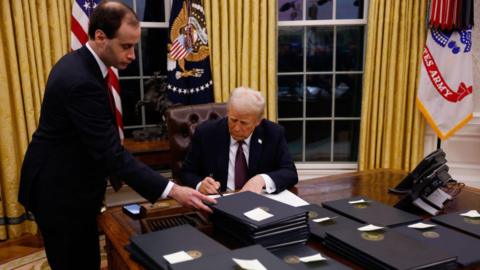
It is possible that funding could disappear almost immediately, and it is not clear that other nations will step up to fill the gap. A US withdrawal could have an impact on WHO's ability to respond to emergencies such as an Ebola outbreak, or MPOX – let alone another Covid-19-style pandemic.
Public health experts have suggested there could be other consequences for Americans' health if progress is reversed on fighting infectious diseases such as malaria, tuberculosis, HIV and Aids.
Ashish Jha, who formerly worked as Covid-19 response co-ordinator under President Biden, previously warned leaving would "harm not only the health of people around the world, but also US leadership and scientific prowess".
"It's a cataclysmic presidential decision. Withdrawal is a grievous wound to world health, but a still deeper wound to the US," Lawrence Gostin, a global public health expert and Georgetown University professor said.
There are also concerns that America's withdrawal could ultimately open the door to greater Chinese influence over the global body, not less.
The upsides to the move are few, but some argue it could prompt further reforms of how the WHO works, meaning it better serves public health needs of people worldwide.
If that happens, it might be enough to tempt the US back into the fold. However, the tone of the language coming from Washington suggests this second attempt by President Trump to pull the US out of the international health body will not be reconsidered.