Wubi News

'Pregnancy is a risk I'm willing to take': Why some women are ditching the pill

2025-01-20 17:00:09
Some women are ditching pills and coils for fertility apps

Dr Baraitser says some of the patients she sees have switched to the apps after struggling on hormonal treatments like the pill.

"Taking hormones changes your body and people are very individual in their responses, positive and negative.

"For example, oestrogen often reduces acne and combined hormonal methods, like the combined pill, patch or ring, help control your bleeding.

"On the other hand people might experience mood changes or changes to their libido."

She says it can be a process of trial and error, switching between methods until you find something that suits you.

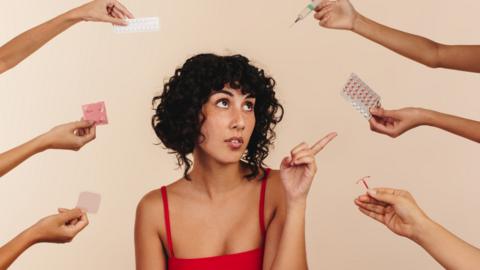
Condoms are the only type of contraception that can both prevent pregnancy and protect against sexually transmitted infections.

Emily, who is 39 and from Glasgow, had an abortion in 2021 after finding out she was pregnant while using a tracking app as contraception.

In 2018 she came off the pill which she'd been on since the age of 17, initially to control acne.

"My mood was low, I was putting weight on and I couldn't lose it. I was experiencing symptoms like low libido. I gave it a break and as soon as I came off it I felt infinitely better," Emily said.

Looking for a non-hormonal alternative and wanting to avoid the experience of having a coil fitted, she chose to use the menstrual cycle tracking feature on her iPhone Health app.

In 2021 she found out she was two months pregnant with her then partner of four months - who is now her husband.

Emily said: "I got a urine infection which kicked my cycle out of sync a little bit. Before I knew it a couple of months passed and I'd not had a period. I felt really unwell one day and thought either this is Covid, or I'm pregnant. I went home and took a test for both. The pregnancy test came back positive.

She says her partner, now husband, was amazing.

"We spoke about it and read lots of resources online. We barely knew each other at the time and didn't live together so we decided we couldn't go ahead and have a child."

Following the termination, she decided to try a different contraceptive.

"[With tracking apps] I know your cycle needs to be really regular and really consistent. I didn't want to gamble that risk again," she said.

She opted for the the non-hormonal copper coil.

"I've always had lower back pain but, since the coil, on my periods that is now worse. And I now get pain during ovulation. It's not ideal, but it is what it is.

"It enrages me that in this day and age there's so much medical research in other areas, but then we have a contraceptive pill over 50 years old and this barbaric coil insertion procedure."
Freya, who is 26, came off hormonal contraception in an attempt to see if it might help her mental health.

"I had been on it since I was 15 or so, so I didn't really 'know myself' without it.

"I opted to use condoms during the times when the app said I would be at risk of pregnancy.

"I ended up pregnant within three months and opted for an abortion which I found extremely distressing mentally and physically.

"The fact I'd been using the app instead of my normal contraception made me feel as though I couldn't tell anyone."

She says the experience has put her off using natural contraception again because "the stakes feel too high."

Alice, is 41 and from Farnborough. She had side effects while on the pill, including low libido, weight gain, mood swings and bleeding.

"I now have a daughter and I feel sad about her future.

"Why do women and girls have to bear the responsibility of not getting pregnant.

"Immediately after giving birth you are asked what kind of contraception do you want.

"Luckily my husband is fine with condoms... and now I use a fertility app to just track my period but I don't rely on it."

For people interested in fertility tracker apps, there are some things to consider:

Dr Baraitser explained: "After ovulation your temperature goes up - but by a very small amount.

"To pick up a difference this small, you have to measure your temperature whenever the app tells you to, often daily, and you need to do this before you have got out of bed in the morning and before you have eaten or have had anything to drink. If you have a busy life, if you work nights, if you have young children this may be hard to do."

New technologies that monitor temperature continuously - such as wrist temperature measured by a smart watch - may help with this, she said.

The app can only tell you when to have sex and when not to. It's up to you to remember and act on the advice.

Anatole Menon-Johnson is clinical director at Brook which has sexual health clinics around the UK. He said weighing the chance of having an unintended pregnancy was important to consider.

He advised: "Find a provider that will listen to you and allow you to explore and experiment with contraceptive methods.

"It will sometimes take a few attempts to find the best one for you."

Companies say apps can be as much as 93% reliable when used correctly, meaning 7 in every 100 women would get pregnant when tracking their fertility for a year.

That is slightly better than the 91% seen with typical or less than perfect use of the pill and the mini pill.

Perfect use of the pill increases the success rate to 99% - similar to hormone-releasing coils or implants, which do not rely on the user remembering to take them.