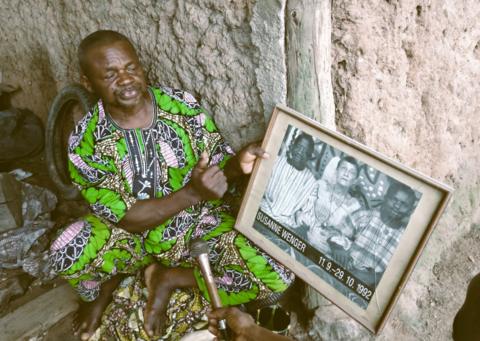
"We will continue to plant trees because heritage must not be left naked," Akangbe Ogun told me when I visited him in 2020.
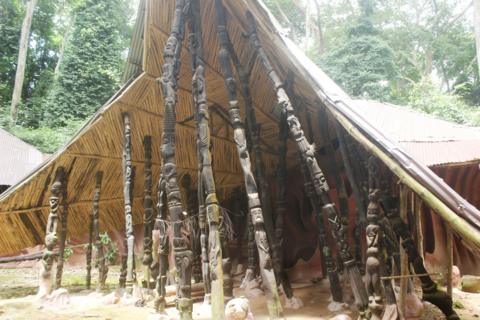
The grove, on the outskirts of Osogbo city, was designated a Unesco World Heritage Site in 2005 for its cultural significance in the cosmology of the Yoruba, and as the largest protected high primary forest in the region.
"Regarded as the abode of the goddess of fertility Osun, one of the pantheon of Yoruba gods, the landscape of the grove and its meandering river is dotted with sanctuaries and shrines, sculptures and art works in honour of Osun and other deities," Unesco says on its website.
"The sacred grove, which is now seen as a symbol of identity for all Yoruba people, is probably the last in Yoruba culture," it adds.
Works from The New Sacred Art Movement are currently on show in the landmark Nigerian Modernism exhibition at Tate Modern.
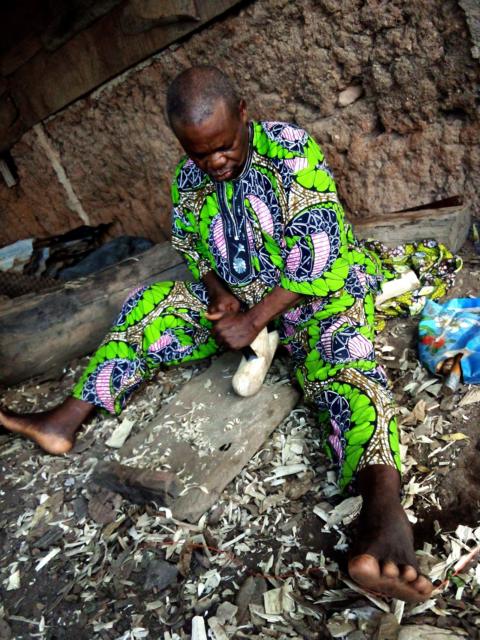
"Kasali Akangbe Ogun was a vital figure within the New Sacred Art Movement, whose work brought spiritual depth to Yoruba devotional practice.
His art "stands as a testament to a life committed to faith, community, and visual poetry," exhibition curator Osei Bonsu said.
Akangbe Ogun was one of those helping to safeguard the forest from misuse, even confronting and getting into scrapes with those trying to fish in the sacred River Osun, where such activities were prohibited, to preserve the pristine environment.
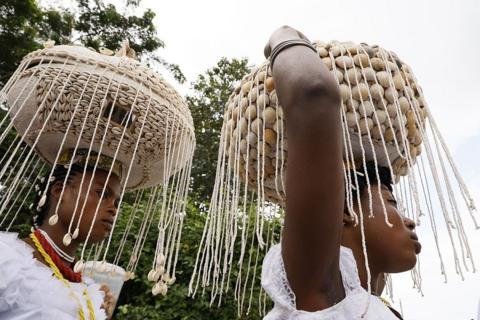
The river is the focus of the annual Osun Osogbo Festival, which attracts thousands of worshippers and spectators and is one of the biggest tourism draws in Nigeria.