Jake Leguee is a third-generation farmer in Saskatchewan, Canada.
Since his grandfather bought the 17,000 acres in 1956, the Leguee family has grown canola, wheat, flax and green lentils.
As a child, he watched his father and grandfather spending hours riding their tractor to sow seeds and spray crops. Sweat would coat their shirts after those long, hot days.
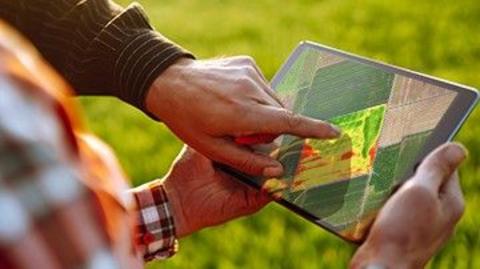
"It was a lot less efficient back then," says Leguee. "Today, technology has vastly improved the job that we do."
To keep his farm competitive, Leguee has made several innovations, particularly when it comes to crop spraying.
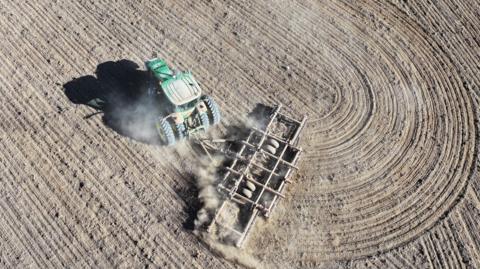
With software and remote cameras attached to his John Deere tractor, he can kill the weeds much more efficiently, a practice every farmer has to do before planting seeds.
"It can look down and spray a nozzle when the sensors pick a weed, while we're going around 15 miles an hour," Leguee says.
He adds that he saves on pesticide spray since the nozzles only turn on when weeds are detected, as opposed to the kind of blanket spraying he used to do.
The return-on-investment for adding these new layers to his farm operations are often high, Leguee adds.
"There are low-cost solutions that won't be as expensive as new spraying tech, and they could be an app to help you better keep your records, for example," he says.