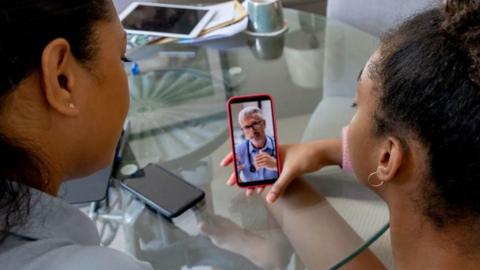
Patients can already get test results on the NHS app and have online appointments.
But this service builds on that by essentially offering a start-to-finish service digitally, building on some initiatives that have already been piloted.
For example, University Hospital Southampton developed a virtual follow-up service for low-risk inflammatory bowel disease, enabling patients to access care and support remotely when they had flare-ups.
It meant the NHS trust could cut back on routine follow-up appointments. Three quarters of patients were managed virtually and the initiative was credited in reducing waiting times by 58%.
Meanwhile, Moorfields Eye Hospital in London has introduced a virtual system for managing non-emergency eye referrals. More than half ended up being treated in routine clinics without the need for specialist treatment at Moorfields.
Moorfields Eye Hospital consultant Peter Thomas said: "The impact is clear – patients are being seen more quickly in more appropriate settings, and the pressure on NHS services is being reduced."
Dr Becks Fisher said, of the Nuffield Trust think tank, said the service will be helpful for some and focussing on menopause and menstrual health "makes sense" given the long waits for gynaecology services.
But she added "tricky questions remain", including how the service will be staffed and paid for.
She also said: "NHS IT infrastructure could also pose a problem, as it will need to enable relevant information – like scan results – to be seen across different NHS organisations, something that is infamously difficult at the moment."