Wubi News

Trump wants Venezuela's oil. Will his plan work?

2026-01-06 01:00:11
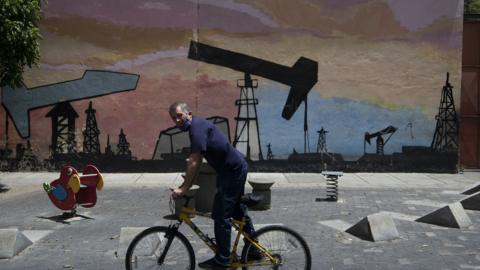
Venezuela has the largest oil reserves in the world, though the country's production is limited due to sanctions (file photo)

Donald Trump has vowed to tap into Venezuela's oil reserves after seizing President Nicolás Maduro and saying the US will "run" the country until a "safe" transition.

The US president wants American oil firms to pile billions of dollars into the South American country, which has the largest crude oil reserves on the planet, to mobilise the largely untapped resource.

He said US companies will fix Venezuela's "badly broken" oil infrastructure and "start making money for the country".

But experts warned of huge challenges with Trump's plan, saying it would cost billions and take up to a decade to produce a meaningful uplift in oil output.

So can the US really take control of Venezuela's oil reserves? And will Trump's plan work?

With an estimated 303 billion barrels, Venezuela is home to the world's largest proven oil reserves.

But the amount of oil the country actually produces today is tiny by comparison.

Output has dropped off sharply since the early 2000s, as former President Hugo Chavez and then the Maduro administration tightened control over the state-run oil company, PDVSA, leading to an exodus of more experienced staff.

Though some Western oil firms, including the US company Chevron, are still active in the country, their operations have shrunk significantly as the US has widened sanctions and targeted oil exports, aiming to curb Maduro's access to a key economic lifeline.

Chevron is the only American oil producer still active in Venezuela, after receiving a licence under former President Joe Biden in 2022 to operate, despite US sanctions.

The company, currently responsible for around a fifth of Venezuelan oil extraction, said it is focused on the safety of its employees and is complying "with all relevant laws and regulations".

Other major oil firms have been publicly silent on the plans so far, with only Chevron addressing the situation.

But Mr Falakshahi said oil bosses will be in talks internally about whether to take advantage of the opportunity.

He added: "The appetite to go somewhere is linked to two main factors, the political situation and the resources on the ground."

Oil firms may be reluctant to return to Venezuela given their previous experiences. ExxonMobil and ConocoPhilips are still seeking billions in compensation from Venezuela after their assets were expropriated in the 2000s.

However, despite the hugely uncertain political situation, Mr Falakshahi said "the potential prize may be deemed too big to avoid".

Lord Browne said companies would want to get involved because "having options for business in different parts of the world is a good thing to have".

"As a piece of business, if you were running a company... you want to get involved very quickly".