The boycotts and protests over Israel's inclusion have been the biggest crisis Eurovision has ever seen.
This year's competition also had a voting controversy and allegations that Israel's government tried to influence the public vote.
This prompted some competition rules to be changed and tightened, after which a "large majority" of members agreed there was no need for a further vote on participation and that Eurovision 2026 could proceed as planned, the EBU has said.
Israel's President Isaac Herzog has praised the decision to allow the country to compete, calling it an "appreciated gesture of solidarity, brotherhood, and co-operation".
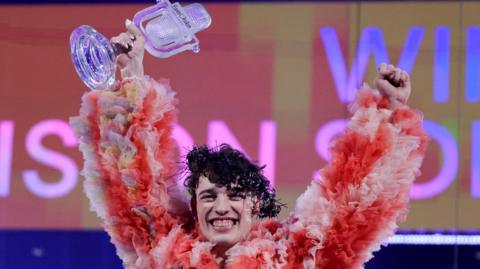
Addressing the boycotts, Nemo insisted that their decision to hand back the trophy was not about "individuals or artists", but rather what they believed was the use of Eurovision to "soften the image of a state accused of severe wrongdoing".
"When entire countries withdraw, it should be clear that something is deeply wrong," they added.
"If the values we celebrate on stage aren't lived off stage then even the most beautiful songs become meaningless."
The war in Gaza was triggered by the Hamas-led attack on southern Israel on 7 October 2023, in which about 1,200 people were killed and 251 others were taken hostage.
More than 70,370 people have been killed in Israeli attacks in Gaza since then, according to the territory's Hamas-run health ministry.
Next year's Eurovision is due to take place in Vienna, for what is supposed to be a celebratory 70th anniversary edition of the contest.