Wubi News

Single women risk rape and exploitation in search for better life in Europe

2025-12-06 18:00:02

Esther was sleeping on the streets of Lagos when a woman approached her with the promise of a route out of Nigeria to a job and a home in Europe.

She had dreamt of a new life, especially in the UK. Thrown out of a violent and abusive foster home, she had little to stay for. But when she left Lagos in 2016, crossing the desert to Libya, she had little idea of her traumatic journey ahead, forced into sex work and years of asylum claims in country after country.

The majority of irregular migrants and asylum seekers are men - 70% according to the European Agency for Asylum - but the number of women like Esther, who have come to Europe to seek asylum is on the rise.

"We are seeing an increase in women travelling alone, both on the Mediterranean and the Balkan routes," says Irini Contogiannis from the International Rescue Committee in Italy.
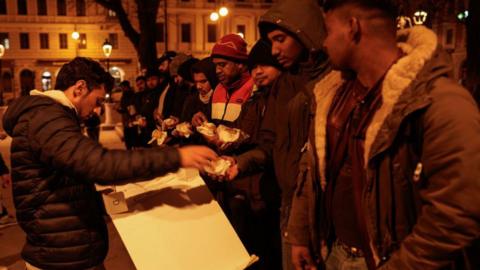
Most migrants who arrive in Trieste via the Balkan route are male

After four months of being exploited in Libya, Esther escaped and crossed the Mediterranean in a rubber dinghy from which she was rescued by the Italian coast guard and taken to the island of Lampedusa.

She claimed asylum three times before she was granted refugee status.

Asylum seekers from countries viewed as safe are often rejected. At the time Italy viewed Nigeria as unsafe, but two years ago it changed that assessment as governments across Europe began tightening their rules in response to the big migrant influx into Europe of 2015-16. Voices calling for further restrictions on asylum claims have only grown louder since.

"It's impossible to sustain mass migration -- there is no way," says Nicola Procaccini, an MP in Giorgia Meloni's right wing government. "We can guarantee a safe life to those women who are really in danger, but not to all of them."

"We have to be hard-headed," warns Rakib Ehsan at the conservative think tank Policy Exchange. "We need to prioritise women and girls who are at immediate risk within conflict-affected territories, where rape is being used as a weapon of war."

Currently this is not happening consistently, he argues, and while he sympathises with the plight of women facing hazardous routes into Europe "the key is controlled compassion".

However, many women arriving from countries considered safe claim that the abuse they suffered on account of being a woman has meant that life in their home countries has become impossible.

This was the case for Nina, a 28-year-old from Kosovo.

"People think everything is well in Kosovo, but that's not true," she says. "Things are terrible for women."

Nina says she and her sister were sexually abused by their boyfriends who forced them into sex work.

A 2019 report by Europe's OSCE security organisation suggested that 54% of women in Kosovo had experienced psychological, physical or sexual violence from an intimate partner since the age of 15.

Women who face persecution on the grounds of gender-based violence are entitled to asylum under the Council of Europe's Istanbul Convention, and that was backed up by a landmark ruling by the EU's top court last year. The Convention details gender-based violence as psychological, physical and sexual - and includes female genital mutilation (FGM).

However, its terms are not yet applied consistently, according to charity groups.

"A lot of asylum officials in the field are men who are insufficiently trained to deal with such a delicate issue [as female genital mutilation] - both medically and psychologically," says Marianne Nguena Kana, Director of End FGM European Network.

Many women have their asylum claims denied, she says, on the mistaken assumption that, because they have already undergone FGM, they face no further risk.

"We've had judges saying: 'You've already been mutilated, so it's not dangerous for you to go back to your country, because it's not like they can do it to you again," Nguena Kana says.

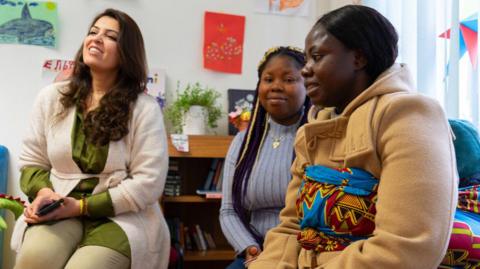
The International Rescue Committee works with migrants and refugees in Italy