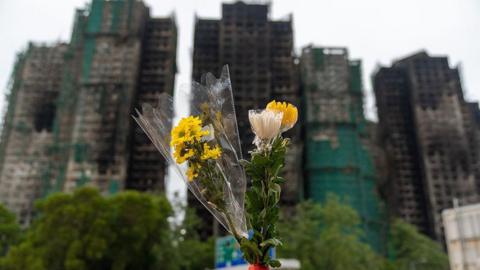
In the past week, authorities have also arrested 15 people on suspicion of manslaughter and ordered the removal of mesh netting from all buildings undergoing renovations after investigators found that the one wrapped around the charred complex did not meet flame retardant standards.
Separately, one woman has been arrested for trying to profiteer from the crisis using a fake fundraising campaign.
China's national security office in Hong Kong swung into action swiftly after last week's disaster, warning that it would take action against anyone trying to instigate "black terror" - a phrase Beijing had used to describe the 2019 protests.
In a more strongly-worded statement this week, it vowed to punish "hostile foreign forces... no matter how far away" they may be.
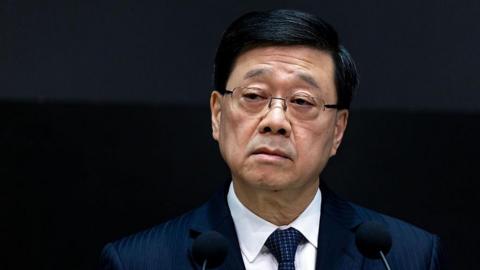
Lee, Hong Kong's chief executive, said he would "ensure justice is [served]" to anyone who tries to "sabotage" relief efforts.
Former district councillor Kenneth Cheung, who was among those arrested reportedly by national security police, says authorities took issue with content he re-shared on Facebook following the fire.
"The Tai Po fire is a tragedy that concerns everyone in Hong Kong. Many, regardless of their political loyalties, want the culprits to be held accountable," says the 50-year-old, who is out on bail but has had his passport impounded.
"Not everything is about politics," Cheung says.
Hong Kong authorities are dealing with this disaster using Beijing's playbook, which focuses on social control and regime security, alleges Kenneth Chan, a politics professor at the Hong Kong Baptist University.
He notes how authorities have over the weekend displaced community-led relief initiatives with groups backed by the government.
"Officials will not embrace the spontaneity of these grassroots efforts because they want control," he alleges.
On social media in HK comments piled in responding to the arrest. Most of them unhappy over the arrests and the government response.
"Demanding the truth is considered incitement?" one such comment said.