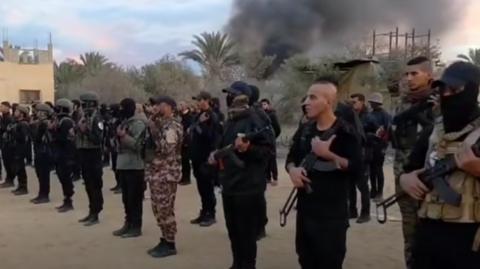
In June, Israel's Prime Minister Benjamin Netanyahu confirmed that Israel was arming Palestinian clans in Gaza that he said were opposed to Hamas.
It came after Israeli media reported that he had authorised the supply of weapons to the Popular Forces. However, the militia denied that it was being armed by Israel.
The Popular Forces have been accused of looting humanitarian aid trucks sent into Gaza during the war, which the militia has also denied. Reports in Israel have also suggested that two of its members have previous links to the Islamic State group (IS).
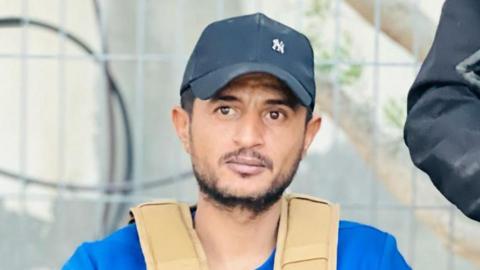
Since the ceasefire between Israel and Hamas began almost eight weeks ago, Abu Shabab had reportedly been one of several anti-Hamas militia leaders jostling for position in the second phase of US President Donald Trump's Gaza peace plan.
It would involve setting up an interim government, deploying an international stabilisation force, the withdrawal of Israeli troops, and the disarmament of Hamas.
Under the first phase, Hamas agreed to return all 48 living and dead hostages it was still holding in exchange for the release of hundreds of Palestinian prisoners and detainees in Israeli jails, as well as a partial Israeli withdrawal and a surge in humanitarian aid.
The body of one dead Israeli hostage is yet to be returned.
Israel's government has previously said it would not join talks on the second phase until Hamas has returned all the hostages. However, Trump said on Wednesday that the second phase was "going to happen pretty soon".
The war in Gaza was triggered by the Hamas-led attack on southern Israel on 7 October 2023, in which about 1,200 people were killed and 251 others were taken hostage.
More than 70,120 people have been killed in Israeli attacks in Gaza since then, according to the territory's Hamas-run health ministry.