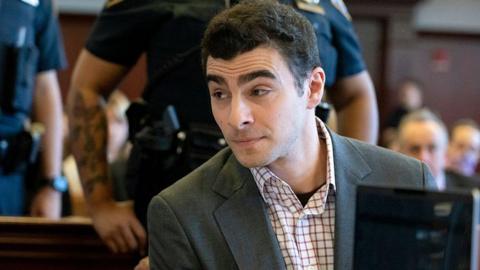
Eliminating those two critical pieces of evidence - that point to a murder weapon and motive - would be a big win for Mr Mangione's legal team.
But the chances of that happening are "virtually non existent", said Dmitriy Shakhnevich, a criminal defence attorney in New York.
He said that's because there are a number of exceptions to constitutional rules that law enforcement must obtain a warrant for personal searches, including some that may cover this case.
"In a case like this where there's a manhunt for a violent suspect who committed this alleged crime in plain view in New York City, nobody's getting a warrant," Mr Shakhnevich said.
"When they get him, they're going to search him."
Prosecutors say they have other key evidence against the defendant, including DNA or fingerprints on items discarded near the crime scene.
Mr Mangione's attorneys are probably aware of the long odds of getting evidence excluded, Mr Shakhnevich said.
He added that the main reason why defence lawyers hold these type of proceedings is to preview trial testimony from law enforcement.
So far, the court has heard from New York Police Department Deputy Commissioner of Public Information Sgt Chris McLaughlin, who was asked to review surveillance images from after the shooting.
Prosecutors in court also played CCTV showing the killing. A worker who handled security cameras at the McDonald's in Altoona testified as well.
Prosecutors played a 911 call for the court from a manager at the fast food restaurant who said customers had told her one patron looked like the suspect in Mr Thompson's killing. The manager said she had looked online for pictures of him but could only make out Mr Mangione's eyebrows as he ate in the restaurant, since he wore a hat and face mask.
The court also heard from a correctional officer at the jail where Mr Mangione was being held who said he appeared "unbothered and logical" as the two discussed literature and health care, though Mr Mangione did not give his opinion on the latter topic.
The officer said Mr Mangione was placed under a high level of security because they wanted to avoid an "Epstein-style situation", a reference to convicted sex offender Jeffrey Epstein, who killed himself while in a federal detention centre.
Mr Shakhnevich said the legal team wants to have this type of information from witnesses so they can be aware of what people might say at trial, and to be on the lookout for any inconsistencies in their statements.
"The benefit of the hearing is that you get to have law enforcement officials testify, and you get to bind them to testimony for a trial later on," he said.
Mr Mangione's legal team has also been pushing to bar the federal government from seeking the death penalty.
They have said comments from high-ranking officials, including Attorney General Pam Bondi, accusing Mr Mangione of the murder have prejudiced his case, which they claim is motivated by politics.