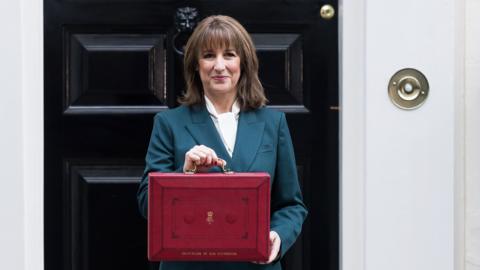
In other words, nothing she said in that news conference was wrong.
But – and this is the key point – we now know she knew something then she didn't share with us that morning – and that is that tax receipts were much better than expected and more than offset the reduction in productivity growth.
The OBR has since made that very clear and set out the timetable of when it told the Treasury what – including that the chancellor knew about the tax receipts data at the time of the news conference.
In fact, 10 days later the Treasury did choose to volunteer this fact about tax receipts, when the Financial Times reported that income tax rates wouldn't change in the Budget after all, and the markets then wondered how on earth the numbers would add up.
What followed was briefing, to me and others, which was accurate and was intended to be reassuring to those markets – and which amounted to saying tax receipts are much stronger than we expected, so it's OK.
So, in that news conference a month ago, the chancellor volunteered to share some of the information she was privy to, but chose not to share some other information she was also privy to – only to then choose to share the thrust of it when she judged it to be politically expedient 10 days later.
I should say the Treasury maintains that it is unfair to say she was misleading because at the time of the news conference the chancellor confronted a huge hole in her spreadsheets given the buffer or headroom she wanted to build up and the policy choices she wanted to make.
The numbers do back this up.
And the OBR could say the chancellor was right to be conservative and cautious, or that she should have based her plans on early versions of the watchdog's forecast - because that would be the right thing to do. OBR boss Richard Hughes will be answering questions from MPs on the Treasury Committee on Tuesday morning.
But the words on the day left an impression not at one with the facts we were later to discover and which the chancellor knew at the time.