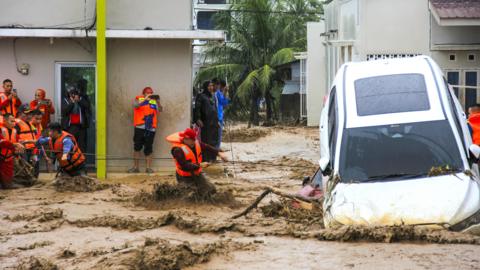
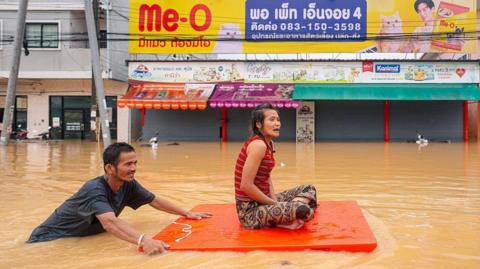
In neighbouring Malaysia, the death toll is far lower, but the damage is just as devastating.
Flooding has wreaked havoc and left parts of Perlis state underwater, with tens of thousands forced into shelters.
Elsewhere in Asia, Sri Lanka has been battered by Cyclone Ditwah, with at least 193 people killed and more than 200 missing, according to the Disaster Management Centre.
Sri Lanka is also grappling with one of its worst weather disasters of recent years, and the government has declared a state of emergency.
More than 15,000 homes have been destroyed and some 78,000 people forced into temporary shelters, officials said. They added that about a third of the country was without electricity or running water.
Meteorologists have said the extreme weather in South East Asia may have been caused by the interaction of Typhoon Koto - which has crossed over the Philippines and is now heading towards Vietnam - and the rare formation of Cyclone Senyar in the Malacca Strait.
Three people have already been killed and another is missing in Vietnam due to the effects of the approaching Typhoon Koto, news agency AFP reports.
The region's annual monsoon season, typically between June and September, often brings heavy rain.
While it is hard to link individual extreme weather events to climate change, scientists say it is making storms more frequent and intense, resulting in heavier rainfall, flash flooding and stronger winds.