The final test was a blunt one. Maarten Logtenberg wielded a sledgehammer, which simply bounced off the sample, barely leaving a scratch.
After two years of experimentation, the material was finally right: a particular mix of thermoplastics and fibreglass that is strong, has no need of extra coating to protect it from sunlight, and is resistant to fouling and marine growth.
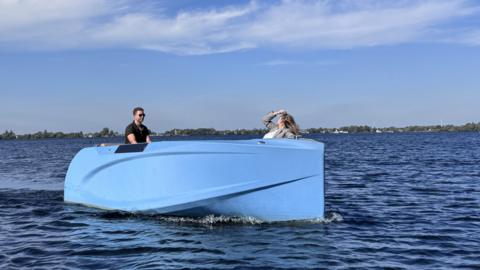
The perfect base, says Mr Logtenberg, from which to 3D print a boat.
Boats need to withstand the unforgiving nature of the marine environment. It's one of the reasons why boatbuilding is a notoriously labour-intensive business.
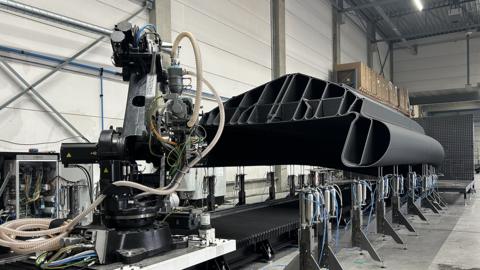
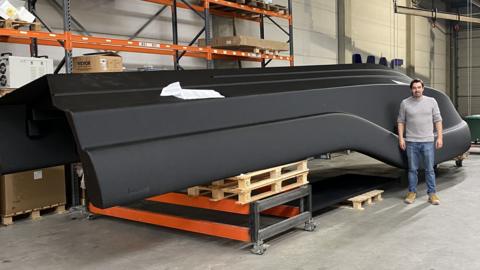
But after months of tweaking the chemistry, it took just four days for the first hull to roll off the printer at the new factory that Mr Logtenberg and his colleagues run.
"We're automating almost 90% of the boat-building process, and in superfast time," he says.
"Normally it takes weeks to build a hull. We print one now every week."
It's the kind of story that 3D printing has long promised. A quick, labour-saving production process that drastically reduces costs.