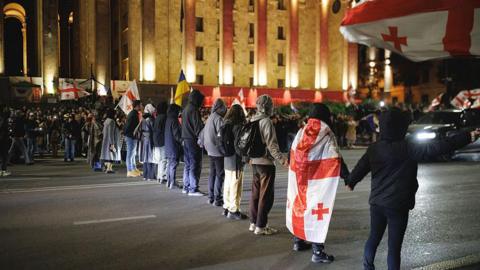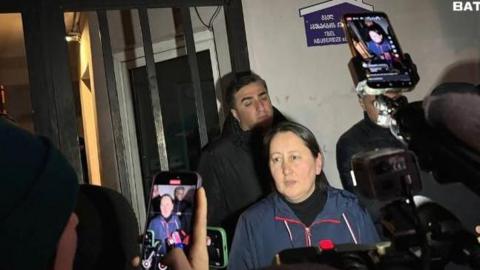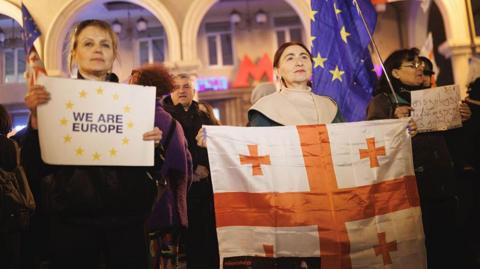
"I'm standing for the future of this country," says Giorgi Arabuli, who has taken part in protests on the streets of Georgia's capital Tbilisi almost every night since they began a year ago.
Mass demonstrations were met with violent police crackdowns as tens of thousands of Georgians turned out, angered by Prime Minister Irakli Kobakhidze's decision on 28 November 2024 to call a four-year halt on moves towards joining the EU.
"I'm from the generation of the 1990s. I've seen those dark times after the civil war," said Giorgi. "Most of it was caused by Russian influence in a post-Soviet country. We don't want to go back there."
Since then Georgians have seen a "dismantling of democracy", in the words of governments across Europe, and it has prompted accusations of Russian-style rule.
On the streets, the protests have evolved into a grinding war of attrition.
For months, Tbilisi's main Rustaveli Avenue was blocked for a few hours every evening. New laws and a heavy police presence forced the protesters to adapt, marching through adjacent streets and facing nightly arrests.