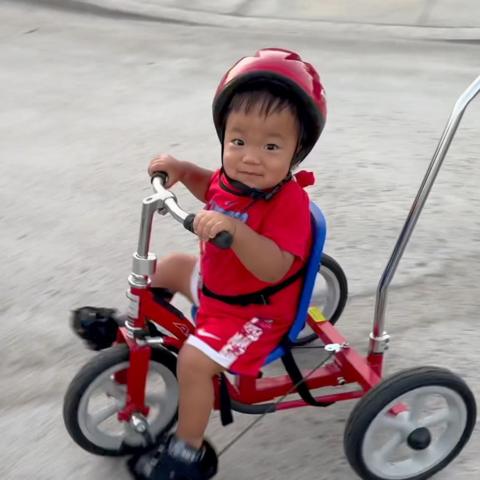
We first meet Oliver and his dad Ricky in December 2024 at the clinical research facility at Royal Manchester Children's Hospital. It's a big day.
Since being diagnosed with Hunter syndrome in April, Oliver's life - like that of his elder brother, Skyler, who also has the condition - has been dominated by hospital visits.
Skyler had shown some late development in speech and coordination, but this had initially been put down to being born during Covid.
Ricky tells me his sons' diagnosis came as a complete shock.
"When you find out about Hunter syndrome, the first thing the doctor tells you is 'Don't go on the internet and look it up because you'll find the worst cases and you'll be very, very disheartened'."
"But, like anybody, you look it up and you're like, 'Oh my goodness, is this what's going to happen to both my sons?'"
Children are born apparently healthy, but around the age of two they start to show symptoms of the disease.
These vary and can include changes to physical features, stiffness of the limbs and short stature. It can cause damage throughout the body, including to the heart, liver, bones and joints and in the most serious cases can lead to severe mental impairment and progressive neurological decline.
Hunter syndrome almost always occurs in boys. It's extremely rare, affecting one in 100,000 male births in the world.