Wubi News

UK 'world's most expensive place' to develop nuclear power

2025-11-24 13:00:03
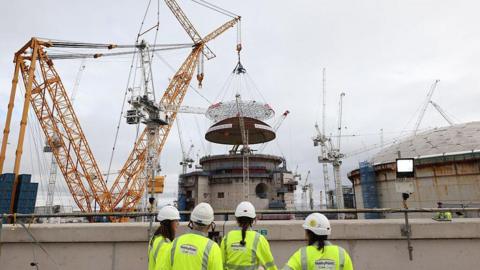
Hinkley Point C in Somerset is under construction

The UK has become the "most expensive place in the world" to build nuclear power plants, according to a government review which criticises "overly complex" bureaucracy around the sector.

The report, which was commissioned by Prime Minister Sir Keir Starmer, calls for a "one-stop shop" for nuclear decisions.

A "radical reset" of the rules around nuclear power could save Britain "tens of billions" in costs and reverse the industry's "decline" in recent years, the Nuclear Regulatory Taskforce said.

It comes as the UK government looks to build a new generation of nuclear plants to meet the country's future energy needs and net zero targets.

Hinkley Point C in Somerset is expected to start operating in the early 2030s, while Sizewell C - which the government says will be capable of powering six million homes - will follow later that decade.

The UK is also setting up small nuclear power stations, which are faster to build than full-size reactors.

The taskforce's report said the planning system needed to be streamlined and the risks associated with nuclear energy should be brought in line with the rest of the world

It said the UK had excessively risk-averse policies in place, including "overly conservative" rules on radiation exposure levels for workers.

A "fragmented" regulatory system has led to "conservative and costly decisions not proportionate to the actual risk being managed", it said.

The report said nuclear plants - which generate electricity by using atomic reactions to produce heat - were "essential to the UK's future", with the country at risk of missing out on a "worldwide nuclear renaissance".

Taskforce chair John Fingleton said: "Our solutions are radical, but necessary. By simplifying regulation, we can maintain or enhance safety standards while finally delivering nuclear capacity safely, quickly, and affordably."

Beyond the UK, France plans to build at least six new reactors, while China has nearly 30 under construction.

The US completed its first new reactor in over three decades last year, and Japan - which temporarily shuttered its nuclear programme after the 2011 meltdown at Fukushima - now plans for it to supply a fifth of its electricity by 2040.

In contrast, Germany has phased out its use of nuclear power, prioritising alternative renewables like hydrogen.

The development of nuclear energy remains divisive, with public opinion shaded by high-profile safety incidents, including Fukushima and the 1986 disaster at Chernobyl.

Mike Childs, head of policy for environmental campaigning group Friends of the Earth, said: "Nuclear power has always been and will always be extraordinarily expensive, not because of regulation but because of the nature of the technology.

"Investing in energy efficiency, renewable power and energy storage is the economically sensible route to keep energy bills affordable."