Phillipson, who received the code nearly three months ago, added that it was important to make sure women had access to single-service provisions such as rape crisis centres while ensuring that trans people are treated with "dignity and respect".
The 300-page document was drawn up by the Equality and Human Rights Commission (EHRC) after the Supreme Court unanimously ruled that legally a woman should be defined by biological sex for the purposes of the Equality Act.
The EHRC has to provide practical advice to businesses and services - such as counselling sessions for female domestic violence survivors, gyms, hospitals or shopping centres - about how this should work.
Following the Supreme Court ruling in April, the EHRC guidance says single-sex spaces should only be open to people of the same biological sex, otherwise they cease to be single-sex areas.
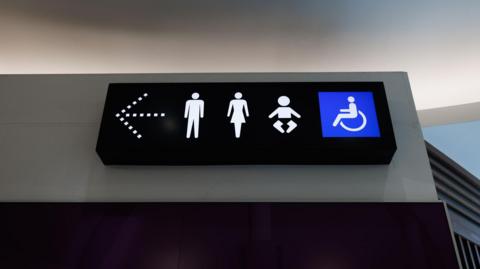
That would mean, for instance, that a trans woman – a biological male who identifies as a woman - would not be able to use women's toilets and changing rooms.
The guidance says transgender people, who are also protected by equalities law, should be treated with dignity and respect.
The updated code of practice is awaiting approval. It can only gain legal force once it has been signed off by ministers and has been laid in Parliament for 40 days.
The guidance, first reported by The Times, says that if there are concerns then decisions about access may need to be based on how someone looks.
"Evidence of such concern might include the individual's physique or physical appearance, behaviour or concerns raised by other service users," the guidance says.
"However, it is unlikely to be legitimate for such concern to be based on whether someone adopts the clothes or other forms of presentation conventionally associated with one or other sex."
There is no type of official document in the UK which provides evidence of sex. If a transgender person holds a legal document called a gender recognition certificate, then they can change their birth certificate to reflect the gender they identify as, rather than their biological sex.
It adds that if a transgender person is excluded from a space, the organisation should consider alternatives and that it would not be proportionate to leave the person without essential services, such as toilets.
The guidance acknowledges that providing alternatives may not always be possible due to space constraints or cost.
It also says "discrimination or harassment could occur" if a person is questioned about their sex and that such questions should be asked "discreetly". Instances of excluding someone from a service should also be handled "as sensitively as possible".