Wubi News

On the front line of Europe's standoff with Russia's sanction-busting shadow fleet

2025-11-19 15:00:11

Out on the western Baltic, a coastguard officer radios a nearby, sanctioned oil tanker.

"Swedish Coastguard calling… Do you consent to answer a few questions for us? Over."

Through heavy static, barely audible answers crackle over from a crew member, who gradually lists the ship's insurance details, flag state and last port of call – Suez, Egypt.

"I think this ship will go up to Russia and get oil," says Swedish investigator, Jonatan Tholin.

This is the front line of Europe's uneasy standoff with Russia's so-called "shadow fleet"; a term that commonly refers to hundreds of tankers used to bypass a price cap on Russian oil exports.

After the Kremlin launched its full-scale invasion of Ukraine, many Western countries imposed sanctions on Russian energy, which Moscow is accused of dodging by shipping oil on aged tankers often with obscure ownership or insurance.
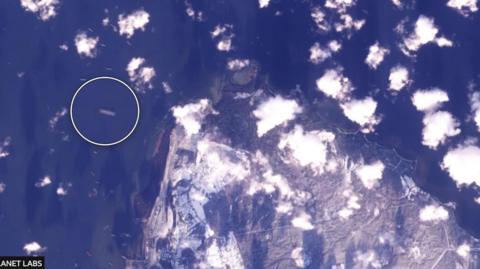
At the time of publication the vessel was anchored just outside the major Russian oil port, Ust-Luga

Unity is just one of hundreds of vessels subject to UK and EU service and port bans as both London and Brussels try to increase pressure on the Kremlin.

Nevertheless, Russian revenues from crude and oil product sales were $13.1bn (£9.95bn) in October alone, according to the Paris-based International Energy Agency (IEA) - although this was down by $2.3bn when compared with the same month a year ago.

Analysis by the Centre for Research on Energy and Clean Air finds that "shadow" tankers, either sanctioned or suspected, account for 62% of shipped Russian crude oil exports, while China and India are by far the biggest customers for crude, followed by Turkey and the European Union itself.

While politicians talk of toughening action, navy and coastguard officers point out that a country's power to act fades the further you go out to sea.

The right of innocent passage remains a cornerstone of maritime law, but stateless vessels technically are not entitled to it.

Countries such as France, Finland and Estonia have detained ships, and they can do so where a crime is suspected, however such drastic controls remain a relatively rare event.

"There's a complexity associated with it," argues Commodore Ivo Värk. "With the Russian presence next to our borders, the risk of escalation is too high to do it on a regular basis."

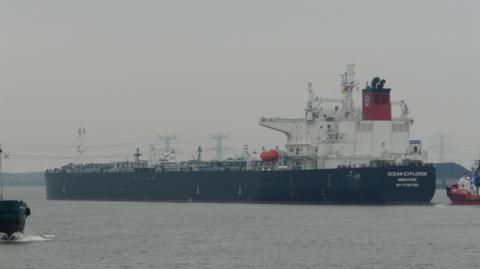
Unity sailing under a former name, Ocean Explorer