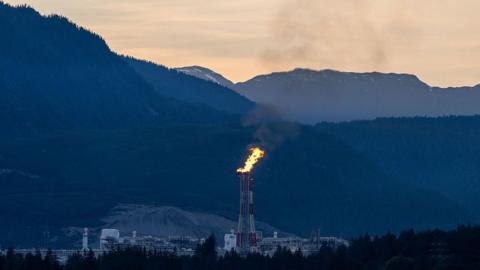
As Canada looks to untangle itself economically from the US, the country's landlocked oil patch is eyeing new customers in Asia through a pipeline to the Pacific. Not everyone is on board.
The oil-rich province of Alberta has had one demand for Prime Minister Mark Carney: Help us build an oil pipeline — and fast.
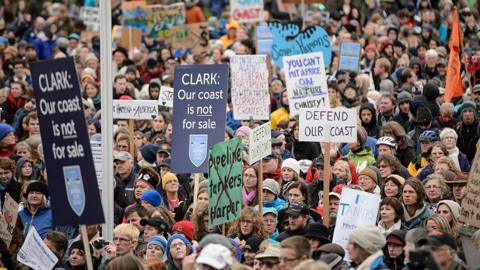
It's no small task — in fact, some argue it has become near-impossible to build a pipeline in Canada because of laws designed to bolster environmental protections. Three oil pipelines have died on the vine in the past decade over fierce opposition.
But Alberta Premier Danielle Smith is not deterred.
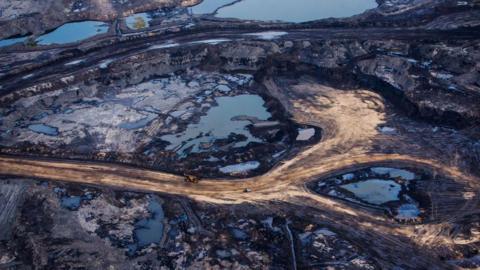
Her conservative government has taken the unusual step of drafting its own proposal for a pipeline from the Alberta oil sands to British Columbia's northern Pacific coast, aimed at reaching Asian markets. Still in the early stages, Smith hopes that by doing the groundwork a private company will eventually take over and build it.
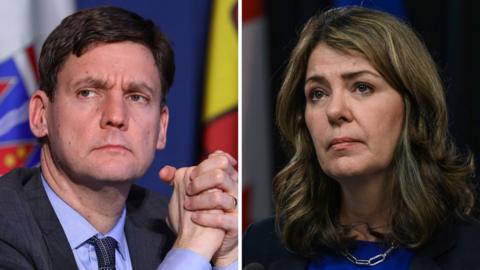
Neighbouring British Columbia, however, is firmly against it. Premier David Eby, with the left-leaning NDP, has dismissed Smith's plan as "fictional" and "political", arguing no company wants the burden of taking it on. He also accused Smith of jeopardising his own province's ambitions to expand liquified natural gas (LNG) exports to Asia.
Smith in turn, has called him "un-Canadian".
The feud between the Western provinces comes at a critical time. Canada is trying to wean itself off its economic dependence on the US amid President Donald Trump's tariffs, and Carney has signalled his desire to double non-US exports in the next decade.
That includes positioning Canada as a global "energy superpower". Almost all of its energy exports, including crude oil, are currently sold to the US.
On Thursday, Carney unveiled new "nation-building projects" he says are key to Canada's growth. The list did not include a pipeline, but does include critical minerals mines and an LNG project in BC.
With Canada home to one of the world's largest oil reserves, Carney is now facing questions from Albertans over whether he can achieve his goals without first solving the internal rifts.
"It is the perennial problem," said Heather Exner-Pirot, director of natural resources, energy and the environment at the MacDonald-Laurier Institute think tank, and who is based in Calgary, Alberta.
"It is unfortunately the main wedge issue in Canadian politics it seems like, and trust me when I say no one in Alberta wishes that their oil was the wedge issue in this country."