Wubi News

UK's first small nuclear power station to be built in north Wales

2025-11-13 17:00:09
Work will begin next year at the Wylfa site (pictured above), with the aim of generating power by the mid 2030s

A first-of-its-kind nuclear power station is to be built on Anglesey, bringing up to 3,000 jobs and billions of pounds of investment.

The plant at Wylfa, on the Welsh island's northern coast, will have the UK's first three small modular reactors (SMR), although the site could potentially hold up to eight.

Work is due to start next year with the aim of generating power by the mid 2030s.

Prime Minister Sir Keir Starmer said Britain was once a world leader in nuclear power but "years of neglect and inertia has meant places like Anglesey have been let down and left behind. Today, that changes."

Simon Bowen, chair of Great British Energy-Nuclear, hailed an "historic moment for the UK".

Llinos Medi, the MP for Ynys Môn, the Welsh name for Anglesey, said it was a "game-changer" for the area "but only if local people see real and lasting benefits".

Mims Davies MP, the Shadow Secretary of State for Wales, said it will bring much-needed jobs and investment but "the current plan will only generate a fraction of the power that a Gigawatt-powered plant would".

Anthony Slaughter, leader of Wales Green Party, said the project was "an expensive distraction from the clean, fast and cheap renewables already available to us".

He added "a fast, ambitious roll-out of solar, wind and wave energy that will create jobs and cut energy bills" was needed.

The Federation of Small Businesses (FSB) Wales said the plant would bring a "once in a generation" boost for jobs, supply chains and regional infrastructure.

Great British Energy-Nuclear has also been tasked with identifying potential sites across the UK for another large-scale nuclear power plant, similar to those being built at Hinkley Point in Somerset and Sizewell in Suffolk, which can power the equivalent of six million homes.

The company will report back by autumn 2026, officials said.

It is not clear whether the SMR plans, which are smaller and more straightforward to build, rule Wylfa out after it was designated the preferred location in 2024 by the previous UK Conservative government.

Prof Simon Middleburgh, director of the Nuclear Futures Institute at Bangor University, said the SMRs would be "built in a modular manner in factories and shipped to the site to be put together a bit like an Ikea chair".

There were "a few more hurdles to go through", he cautioned - from securing regulatory approval, building the factories required to construct the SMRs and training the workforce that will run them.

Opponents of the project point to the fact that a long-term storage facility for the UK's nuclear waste is yet to be agreed upon and say investment in renewable energy schemes - wind, wave and tidal - is what Anglesey needs.

Dylan Morgan, of the People Against Wylfa-B campaign group, said the proposed SMRs were "an unnecessarily big development of an unproven technology".

The government sees them as a secure, reliable, affordable and low carbon energy system and is convinced that, with investment, SMRs will create thousands of jobs and boost manufacturing.

Wylfa beat competition from a site at Oldbury in Gloucestershire, with the reactors designed by Rolls-Royce, subject to final contracts, which are expected later this year.

The UK government said the plant would help provide energy independence.

The decision to opt for small modular reactors at Wylfa was criticised by the US ambassador Warren Stephens, who said he was "extremely disappointed".

He had urged ministers to commit to a large-scale plant, with US firm Westinghouse having reportedly presented plans for a new gigawatt station at the site.

Downing Street said the decision to build the power station in Wales "doesn't close the door" to a US manufacturer working on a future project.
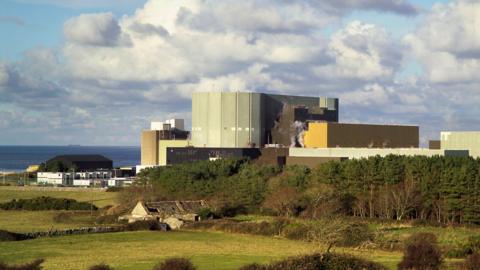

The old nuclear power plant at Wylfa was switched off in 2015 and previous plans for a large-scale replacement fell through in 2021.

The company behind the scheme – the Japanese industrial giant Hitachi - cited spiralling costs and a failure to reach agreement with the UK government over funding.

There is a huge political component to the announcement, with Labour's leadership in Westminster keen to show it means business on big investment in infrastructure projects.

In Wales, the first minister has been pushing hard for Wylfa - and the announcement comes six months before the Senedd election.

Eluned Morgan has been trying to strike a balance: differentiating the Welsh party from UK Labour, while pushing for extra funding, further devolution of powers and big investment announcements from her UK colleagues.

She has certainly got the latter, although plenty of other issues such as reform to how Wales is funded and devolution of the Crown Estate – which owns much of the Welsh coastline and is vital to future wind power – remain unresolved.