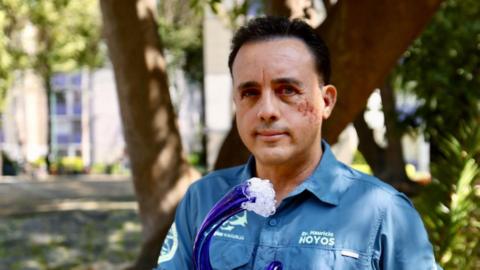
After Hoyos reached the surface, a young man pulled him aboard the boat, and when the captain saw his condition, he called the park ranger station to report the incident.
Hoyos explained that he didn't feel the pain of his injuries until much later.
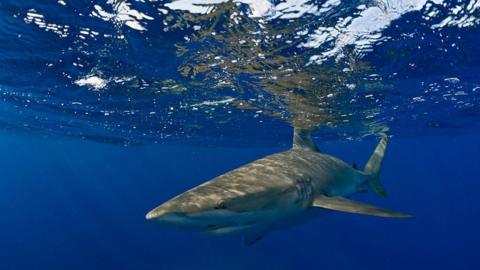
"Obviously, I had adrenaline in my system, but the bite didn't hurt that much. What hurt the most was the impact: when the shark bit me - an animal 3m long and at that speed - it was like being hit by a car. In fact, I ended up with a huge bruise all over my jaw; I thought it was broken."
When they docked, a team of paramedics was ready to provide him with emergency care.
Hoyos was lucky: as well as surviving the attack and the subsequent ascent, none of his wounds became infected, and the healing process took less time than anyone could have imagined.
"The doctors told me it was amazing: the attack happened on 27 [September], I had a 34-hour trip, they performed a surgical debridement [removing damaged tissue], and two days later they were already evaluating whether they could perform reconstructive surgery."
It could have been far worse for Hoyos. According to the doctors, a young man who survived a Galapagos shark attack in the same area in 2017 had to remain in a hyperbaric chamber for almost a month because his wounds weren't healing properly.
"They told me my recovery had been incredible. After the surgery, the doctors confessed how worried they had been about an infection, because being on my face, it was a direct path to the brain."