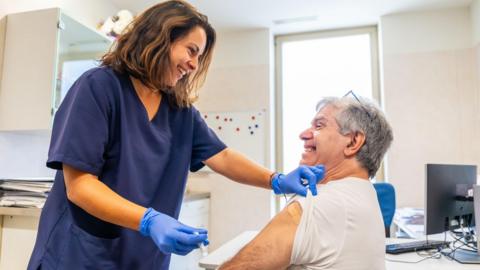
Prof Lewis argues this is "absolutely the most important year" to get vaccinated and that "if you have been called by your GP, please get your flu vaccine as soon as possible".
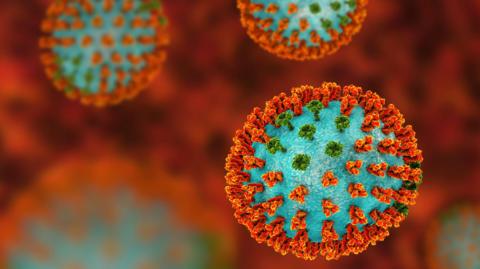
However, this year's vaccine is not a perfect match to the mutated virus.
The decision on the design of the vaccine was made in February to give enough time to produce the millions of doses necessary - and then the new mutant emerged in June.
"Some protection is better than no protection, but this year is likely to be one of the years where the amount of protection is less than it is in years when the match is better," says Prof Fraser. "It's not an ideal situation."
The vaccine will still trigger the body to produce antibodies that can recognise and stick to flu.
But the biggest benefits are anticipated to be in lessening the severity of the disease rather than stopping you getting ill or slowing the spread of the virus.
And the flu vaccine protects against multiple strains of flu, each of which has the potential to cause their own waves of infections.
"Whatever strains do circulate here this winter, we can be confident that the vaccine will still help give some protection to those most vulnerable from developing serious illness and being hospitalised," says Dr Mary Ramsay, director of public health programmes the UK Health Security Agency.
Meanwhile, doctors have been sent advice reminding them that early antiviral treatment reduces the risk of complications from flu.
Japan is also going through an early flu season and has closed schools to help contain outbreaks.
These are not Covid-style lockdowns, but short-term measures the country uses to disrupt the spread of the virus.
Nobody knows for certain what will happen in the coming months.
"It might all go away by next week," says Prof Lewis, "but I don't think it will."