You probably don't give much thought to the device that you're reading this article on, as long as it looks good and keeps working.
But the elements that power and run it are the subject of an escalating struggle between the world's two biggest economies - the US and China - with African countries in the eye of the storm.
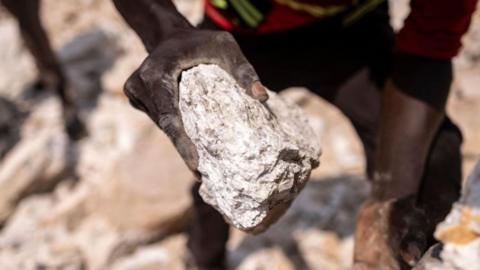
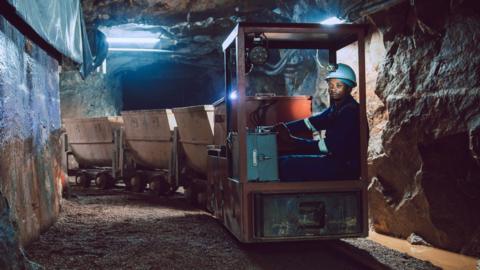
The African continent is rich in critical minerals and metals - like lithium, rare earths, cobalt and tungsten - which are vital to making and running our personal tech. Such materials are also essential for everything from electric vehicles, to AI data centres, and weapon systems.
China has long been the biggest player in the global market for critical minerals and metals. It has significant reserves at home, and access to supplies from overseas thanks to major investment in foreign mining operations - particularly in Africa.
Beijing has also built up a dominant position when it comes to processing global supplies, and it has rattled the US with the threat of curbing exports. That's lent added urgency to US moves to increase its access to critical minerals and metals, with African reserves seen as key to that mission.
This is so much the case that the US has actually quietly overtaken China as the biggest foreign direct investor in Africa, according to the latest annual figures. The US invested $7.8bn (£6bn) across Africa in 2023, compared with $4bn by China, according to the China Africa Research Initiative of Johns Hopkins University, which accessed official data.
It marks the first time since 2012 that the US had regained the lead.