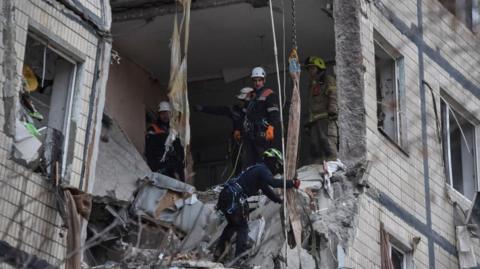
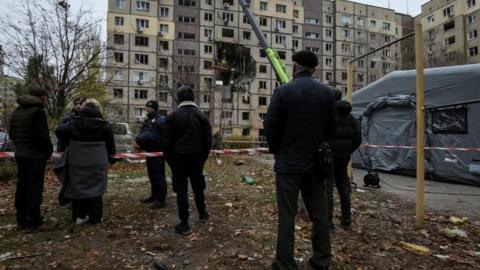
Russia argues its attacks on energy targets are aimed at the Ukrainian military.
Russian attacks on Ukraine's energy infrastructure ahead of winter are now a familiar part of this war. But ministers in Kyiv are acutely concerned that Moscow is not just trying to damage the morale of Ukraine's people but also bring its economy to a standstill by collapsing its energy network.
Analysts say this fourth winter of Russia's full scale invasion will prove a significant test of Ukraine's defensive resilience.
Ukraine's President Volodymyr Zelensky said the attacks showed there must be "no exceptions" to Western sanctions on Russian energy as a way of putting pressure on Moscow.
The missile strikes came only hours after the US gave Hungary a one-year exemption from restrictions on buying oil and gas from Russia.
In October, the US effectively blacklisted two of Russia's largest oil companies, threatening sanctions on those who buy from them.
But on Friday, during a visit to Washington by Hungarian Prime Minister Viktor Orban - a close personal and political ally of Donald Trump - the US president announced the exemption for Budapest.
In a message on Telegram, Zelensky said the overnight attacks showed that "pressure must be intensified" on Russia.
He said "for every Moscow strike on energy infrastructure - aimed at harming ordinary people before winter - there must be a sanctions response targeting all Russian energy, with no exceptions".
He said Ukraine expected "relevant decisions from the US, Europe and the G7".
Debates about sanctions can sometimes seem technical or diplomatic. But for people in Ukraine, they are very real.
If Russia can sell its oil to Hungary, it can use the money earned to build more drones and missiles, like those it launched against Ukraine on Friday night.