
Wubi News

Noughties girl bands lift lid on inner workings of pop stardom

2025-11-08 17:00:10
Girls Aloud, pictured shortly after winning Pop Stars: The Rivals in 2002 (L-R): Cheryl, Sarah Harding, Kimberley Walsh, Nadine Coyle and Nicola Roberts
Sugababes were still teenagers when they released their first album, and had to juggle promotions with schoolwork

In an unpublished interview from 2023, Girls Aloud (mysteriously absent from the documentary) told me a similar story of being cast adrift without an anchor.

Put together on ITV's reality show Pop Stars: The Rivals, they were left to fend for themselves, without a formal day-to-day manager for more than a year.

"It was chaos," said Nadine Coyle. "We were children and nobody was looking after us.

"The marketing team wanted us to do one thing, the live agent wanted us to do another, the TV team wanted us on breakfast TV. And there was nobody looking at the big picture and thinking, 'These girls are working 22 hours a day, seven days a week'."

Cheryl said the band were so clueless that they'd phone the head of their record label to tell him their washing machine had broken down.

"But in the end, we knew how every single part of the business worked," said Kimberley Walsh.

"It gave us a real strength of character," agreed Nicola Roberts. "We weren't afraid to say, 'No, we don't want to do this', because we had no middle man to hide behind."

Other groups were less fortunate. Siobhan Donaghy was only 16 when the Sugababes' first single - the nonchalantly brilliant Overload - hit the Top 10. At the time, she had no idea how to speak up for herself.

"We were too young to know that we could make changes," she told me last year. "We didn't question anything, we just rolled with it.

"Now, if something's not working, we understand it's our business and we get everyone on the same page."

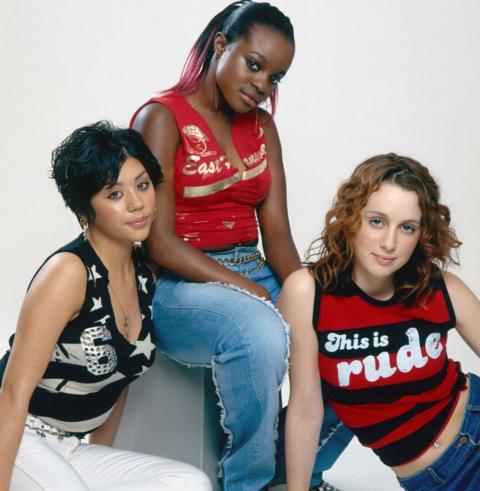
Su-Elise Nash, who was part of the R&B crossover act Mis-Teeq between 1999 and 2005, says the band's independence (they managed themselves and co-wrote all their songs) protected them from the worst of the industry.

"We were never scared to speak our mind and I think that feisty attitude steered us in the right direction," she laughs. "People knew they couldn't take the mick."

Inspired by US vocal harmony groups such as En Vogue and SWV, Mis-Teeq cleverly incorporated garage and hip-hop to their sound, with Alesha Dixon's rat-a-tat MC'ing setting them apart from their more pop rivals.

But despite achieving transatlantic success with songs including Why and Scandalous, the trio faced a constant battle with racism.

One record executive told Dixon that "black girls won't sell records in the UK", and the band found it harder than their white counterparts to secure press coverage.

"It wasn't blatantly, outrightly said that they didn't think three black girls would sell magazines, but that was the attitude of the people in power," says Nash, speaking from her home in Australia.

"Rather than being battered down by it. We just thought, 'Let's work harder to get their respect and eventually they'll come back begging for us to be on the front cover'."

Despite appearances, Mis-Teeq were one of the few girl bands to receive the NME's seal of approval

In contrast to Mis-Teeq, bands such as Girls Aloud and Atomic Kitten became unwilling cover stars, in an era where tabloid newspapers wouldn't think twice about splashing pictures of drunken and distraught pop stars on their front pages.

"There was around 40 paparazzi outside my house every day," says Katona, and they weren't looking for flattering portraits.

"When I had my first baby, Molly, they printed [my photo with] a circle of shame around my stretch marks," she recalls

"It messes your head up. It made me suicidal. I didn't know how else to cope with it, so I turned to drugs.

"If I didn't have my children, I guarantee it, I would not be sat here today."

The harassment, and a string of revelations about her private life, ultimately prompted her to quit the band.

"I realised I didn't want the fame or the riches. I wanted to be a mum and a wife. Being a kid from a foster home, that was all I actually craved."

The dream also came to a premature end for Su-Elise Nash. Mis-Teeq were in the middle of recording their third album when their label, Telstar, went bankrupt.

"It was a tough position to be in," she says. "They went into administration owing us a lot of money."

The band, in the middle of an exhausting six-month tour, decided to call it a day.

"In the same week, my grandmother got diagnosed with thyroid cancer and given months to live," says Nash. "So I got to spend those last six months with her, without having to go back to America, and do all those things that were in the diary,

"I don't have any regrets, because that's time I would never have got back."