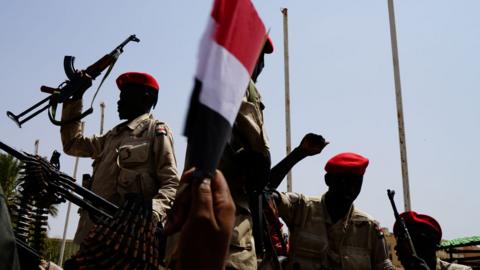
The day before, the RSF announced it had agreed to a humanitarian truce proposed by the US, the United Arab Emirates (UAE), Saudi Arabia and Egypt.
The four countries put forward the plan in September - and said it should be followed by a permanent ceasefire and a transition to civilian rule.
At the time the Sudanese government rejected "foreign interference" and any attempts that equated it with a "racist terrorist militia that relies on foreign mercenaries".
It is not clear if the proposal has been modified since then.
But during a press conference on Friday, Sudan's ambassador to South Africa said it was too early for his country to agree to the plan.
"From our experience, we had many truces at the beginning of the war but every time there was no respect from [the RSF]," Osman Abufatima Adam Mohammed said.
"They use these truces to move to new areas and make moves against the government."
The ambassador opposed the UAE's presence at the ceasefire talks, repeating his government's allegation that the Gulf nation was supplying the RSF with weapons and foreign fighters.
UN experts say accusations of such military support are credible, but the UAE has denied all involvement with the RSF.
The RSF and the military have agreed to ceasefire proposals before, but none have stuck.
This time, the RSF waited until it had finally seized el-Fasher, a key city that it had been blockading for 18 months, before announcing it was on board with the truce.
Now that the paramilitary group has consolidated control over el-Fasher and, consequently, the vast wider western region of Darfur, it may have greater leverage in future ceasefire negotiations.
But the RSF is also facing an international backlash against widespread reports of mass killings and sexual violence during the fall of el-Fasher, which it has denied.