Wubi News

How Kentucky UPS plane crash unfolded and what could have caused it

2025-11-06 21:00:02

UPS uses Louisville Muhammad Ali International Airport as a distribution hub for its global operations and its Flight 2976 was at the start of a 4,300 mile journey to Honolulu in Hawaii when the cargo plane attempted to take off.

Data from tracking website FlightRadar24 shows the plane began to taxi along the 17R runway at around 17:15 local time (22:15 GMT) and managed to reach a top speed of 214mph (344km/h).

But verified footage shows that by the time the plane reached this speed a fire had completely engulfed its left wing and the aircraft struggled to climb away from the runway before the explosion.

The NTSB said the plane's engine was on fire as it was working to take off and then detached from the wing. The plane was able to climb to 175 ft and cleared a fence at the end of the runway before veering into buildings and businesses surrounding the airport.
Officials issued a shelter-in-place order to local residents and scrambled hundreds of firefighters to the scene.

Governor Andy Beshear confirmed details seen in CCTV footage that shows the aircraft flying just metres off the ground before a bright flash engulfed the plane. It is then seen slamming into the ground as a huge fireball erupts around it about a minute into its journey.

A verified clip taken by a motorists on a nearby highway showed the flames erupting into the skyline while later videos showed smoke billowing from the scene.

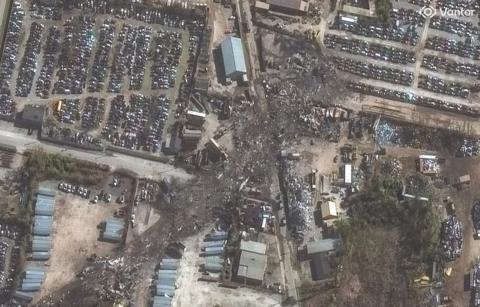
Aerial images broadcast by local media showed debris showering the runway and landing on the roofs of at least two local businesses.

He referenced the 1979 American Airlines Flight 191 disaster, in which 273 people were killed after the plane's engine detached as it took off at O'Hare International Airport in Chicago. Parts of the engine had been damaged when it was replaced on the plane, but Mr Tozer said it was too early to say whether a similar fault caused the engine to detach on the MD-11.

Mr Tozer said the cargo plane would have been able to fly with just two engines but the damage caused by the fire on the left wing was likely so great it caused the plane's engine built into the tail to lose thrust.

"With such a catastrophic event we cannot know what other damage was done when the engine came adrift," he said.

Marco Chan, a senior lecturer in aviation operations at Buckinghamshire New University, said the footage appeared to show the third engine had been damaged because it expelled a burst of smoke. The damage could have happened while it was pelted with debris from the fire and the engine detaching.

"The upper engine that expelled a puff of smoke appears to wind down almost immediately afterwards," Mr Chan said. "That left only the right engine producing thrust, creating a severe power imbalance and leaving the aircraft unable to gain height.

"Losing two engines during take-off leaves the aircraft with only a third of its power and little chance of maintaining flight, especially at maximum take-off weight," Mr Chan added.

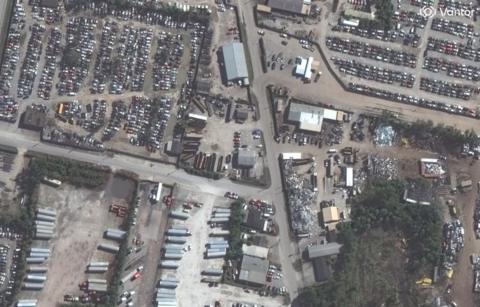
An aerial view of an industrial area near the airport in Louisville before the plane crash.
An aerial view shows that same industrial area in Louisville after the plane crash.

Footage from the aftermath of the crash showed a scene of complete chaos with multiple fires blazing across a large swathe of the site and smoke billowing into the sky.

The plane, which was 34 years old and had been used as a passenger plane until 2006, had already completed one return journey from Louisville on Tuesday to Baltimore in Maryland.

It has not been confirmed what cargo was on board the flight bound for Hawaii, though officials said the plane was not carrying anything that would create a heightened risk of contamination.

"This was a long-haul cargo flight from Louisville to Honolulu, so the MD-11 was carrying a lot of jet fuel," Mr Chan said. "That heavy fuel load not only reduced performance but also explains the large fireball seen after the crash."

Officials told reporters that the aircraft was carrying 38,000 gallons (144,000 litres) of fuel for the long journey when it crashed. The blaze was likely amplified on the ground because the aircraft slammed into a fuel recycling business next to the airport.

Mr Chan said investigators will now focus on how the initial fire began, and "whether debris struck the centre engine, and whether earlier maintenance on the left engine played a role". He added: "Weather conditions were calm and clear, so environmental factors are unlikely."

The National Transportation Safety Board (NSTB) has sent a team to the site and will now lead the investigation into the causes of the crash, though this can take up to two years to complete.

Additional reporting by Emma Pengelly, Kayleen Devlin and Paul Brown.