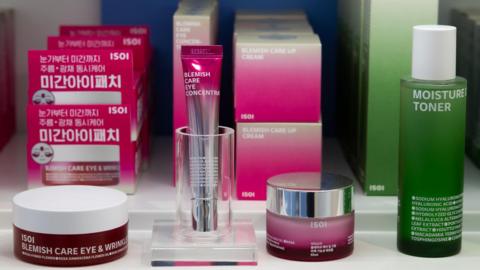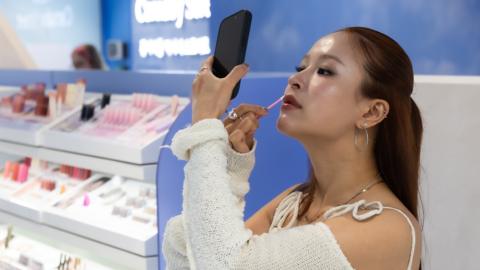
Korean skincare or "K-beauty" products are very popular around the world.
But as exports from South Korea hit $10.3bn (£7.7bn) last year, cosmetics companies in other countries have introduced their own K-beauty ranges that are not Korean-made.
Does this blurring of the definition matter?
K-beauty products first came to international attention in the 2010s, part of a wave of other Korean exports, such as K-pop and K-drama.
The K-beauty skincare regime can be very elaborate, involving as many as 10 different steps, each requiring a separate product. This caught the imagination of people around the world, and sales rose sharply.
Annual exports from South Korea increased from $650m in 2011 to $4bn in 2017, according to official figures, a sixfold rise in just six years.