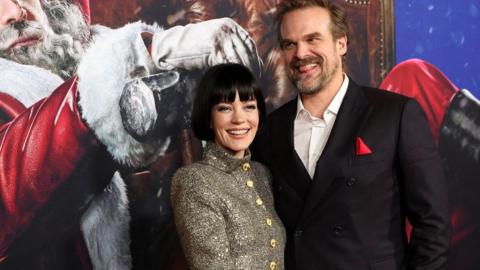
The musician has been careful to clarify that some of the songs are written "in character", saying that the lyrics "could be considered autofiction" - a genre that combines autobiography and fiction.
Harbour has also been circumspect about the end of the marriage. "I'm protective of the people and the reality of my life", he told GQ magazine in April.
"There's no use in that form of engaging [with tabloid news] because it's all based on hysterical hyperbole."
But reviews of West End Girl have understandably focused on the lyrics.
It is "a brutal, tell-all masterpiece," said The Independent's Hannah Ewens in a five star review.
"This musical of deceit and suffering puts her in the starring role, seizing control of her narrative and holding little back."
"Despite the heartache, or perhaps because of it, she sounds artistically reinvigorated," argued Adrian Thrills in the Daily Mail, awarding the album four stars.
"There's a touch too much auto-tune on her voice at times, but no doubting her ability to convey raw emotion with sharp, pithy pop."
It's a "victorious comeback" that represents the star "at her very best", said the NME's Ali Shutler.
"There's a lot of grief and misery [but] Allen's always had a knack for making devastation sound exciting."
"Anyone who's been betrayed will welcome the bravery of her honesty," wrote Helen Brown in The Telegraph, "while no doubt counting their blessings not to live in the emotionally detached celebrity world of sad sex and lonely mansions."
"It's hard not to wonder whether West End Girl is going to get the reception it deserves," noted The Guardian's Alexis Petridis, calling it a "great pop album regardless of the subject matter".
"Perhaps some listeners will view it as too personal to countenance. Or perhaps fans who have grown up alongside Allen, now 40, will find something profoundly relatable in the story it has to tell."