Wubi News

Reports of OCD among under-25s triple in 10 years

2025-10-24 17:00:06
OCD is so much more than being fixated on cleanliness, says Sophie

About 370,000 young people in England reported OCD symptoms in the financial year 2023/24, our analysis of the latest NHS Adult Psychiatric Morbidity Survey (June 2025) has found.

That is more than three times the number from 2014, when the figure stood at around 113,000.

It means OCD is now second in the list of named mental health disorders - placing it and other anxiety disorders well ahead of depression:

Improved awareness of the condition has likely contributed to people seeking help, say experts - but, according to charities and many of those with OCD, societal problems, combined with the pressure of social media, are the main driver for the reported rise.

Leigh Wallbank, chief executive of charity OCD Action, describes many young people's lives as a "pressure pot".

"They're facing financial issues, educational issues, global issues - the environment is such a big issue," she tells us. "I think of them living in this pressure pot, and then underneath that, giving heat to this pressure pot, is social media."

The Covid-19 pandemic also played a part, says Minesh Patel, associate director of policy and influencing at the mental health charity, Mind.

The pandemic put a "particular and unique strain" on people with OCD, with disruption to routine, an inversion of social norms and a hyperfocus on hygiene, he says.

"Barriers to social interaction, including treatment and support services, meant that many coping mechanisms were disrupted or unavailable for an extended period of time," he adds.

NHS help for OCD patients includes specialist talking therapy called Cognitive Behavioural Therapy (CBT) - which can include Exposure and Response Prevention (ERP).

Through ERP patients are helped to manage their anxiety by gradually being exposed to their fears, while preventing them from performing their usual compulsive behaviours.

Medication is also offered - usually a type of antidepressant.

The NHS is blind to the real scale of obsessive compulsive disorder, says Leigh Wallbank from OCD Action

But not everyone can access these treatments.

Sophie was told by her GP that it is likely she does have OCD - but, two years on, she still hasn't received an appointment to see a specialist for a formal diagnosis.

In the meantime, her GP has referred her for a limited course of CBT which comes to an end soon. Sophie says she is "absolutely petrified" of what the future holds.

Leigh Wallbank from OCD Action is critical of the government for failing to collect regular quarterly data on obsessive compulsive disorder, and outcomes for patients who have it, as it does for many other conditions.

Without data, says the charity, the NHS is blind to the real scale of OCD, the success of treatments and who is being left behind.

We asked health officials in Scotland, Wales and Northern Ireland if they knew the number of young people with OCD symptoms, but they all said they do not collect that information.

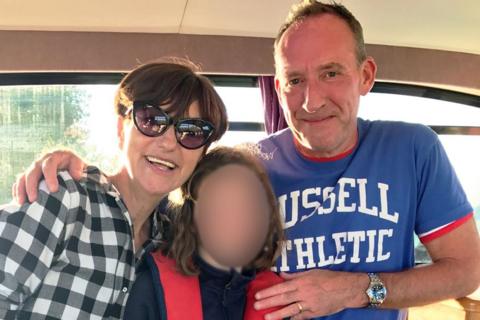
Marie and Graham Fuller felt they had no choice but to pay for OCD treatment abroad for their daughter

The UK's health guidelines for obsessive compulsive disorder are 20 years old - they are currently being reviewed by NICE. In 2019, it was agreed that policy around OCD treatment needed to reflect updated technologies and possible new drugs.

But for Leigh Wallbank from OCD Action she says better funding is imperative if young people are to get the help they need.

"Policymakers and the government need to invest in OCD services. [OCD] is preventable and it is a crisis that can be changed."

A spokesperson for the Department of Health and Social Care said the government had inherited a broken NHS with mental health services suffering following years of neglect - adding that funding was now being boosted by £688m.

But people with OCD such as Sophie are scared about what the future holds.

The limited course of CBT that she's been prescribed is coming to an end and she fears a return of her symptoms.

"What am I going to do? What if it happens again?"

Additional reporting by Emily Doughty

Get our flagship newsletter with all the headlines you need to start the day. Sign up here.