Wubi News

What do US sanctions on Russian oil mean, and who could be affected?

2025-10-23 15:00:02
New sanctions announced by the US have blacklisted Russia's two largest oil producers

US President Donald Trump on Wednesday announced "tremendous" new sanctions against two of Russia's largest oil companies, in a bid to pressure Moscow into ending the war on Ukraine.

The sanctions, announced via Trump's Truth Social platform, target Rosneft and Lukoil - two major oil corporations that help fund the Kremlin's "war machine", according to US Treasury Secretary Scott Bessent.

Russian President Vladimir Putin's refusal to end the "senseless war" prompted the move, Bessent said in a statement.

It comes a week after the UK imposed similar sanctions on Rosneft and Lukoil - and just one day after Trump said a planned meeting with Putin in Budapest would be shelved indefinitely.

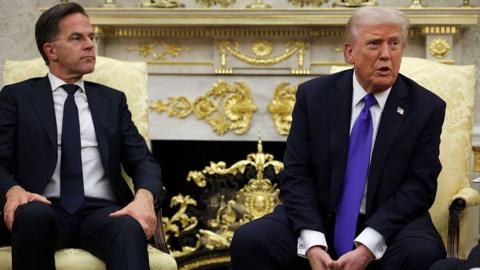
"Every time I speak to Vladimir, I have good conversations and then they don't go anywhere. They just don't go anywhere," Trump said on Wednesday, after a meeting with Nato Secretary-General Mark Rutte to discuss peace negotiations.

"I just felt it was time. We waited a long time."

So what do they sanctions actually mean - for the targeted companies, for the war, and for other countries around the world?
The sanctions, imposed by the US Department of the Treasury's Office of Foreign Assets Control (OFAC), effectively blacklist Russia's two largest oil producers.

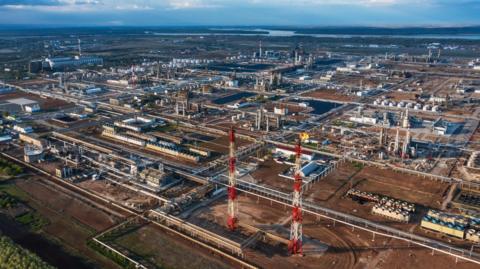
Rosneft, a state-controlled company headed by Putin's close ally Igor Sechin, and Lukoil, a privately held firm, account for nearly half of the nation's total crude-oil exports, according to Bloomberg estimates.

Between them, the two corporations export 3.1m barrels of oil per day.

Rosneft alone is responsible for nearly half of all Russian oil production, which makes up 6% of the global output, according to estimates from the UK government.

"Rosneft is a vertically integrated energy company specializing in the exploration, extraction, production, refining, transport, and sale of petroleum, natural gas, and petroleum products," OFAC said in its statement.

"Lukoil engages in the exploration, production, refining, marketing, and distribution of oil and gas in Russia and internationally."

The end of the Russia-Ukraine war has become a focal point for Trump in recent months - but peace negotiations with Putin has proven difficult for the US president.

Trump has repeatedly endorsed proposals to freeze the fighting along current frontlines, suggesting that territory should be "cut the way it is".

Trump hopes the sanctions can pressure Putin into negotiating an end to the war in Ukraine

These sanctions are sure to deal a blow to Russia's economy, with taxes from the oil and gas industries accounting for about a quarter of the nation's federal budget.

But the ripple effects could also be felt much further afield.

Oil and gas are Russia's biggest exports - with Moscow's biggest customers including China and India, the world's two most populous countries, and Turkey.

Together, China and India make up most of Russia's energy exports.

China last year purchased a record of more than 100 million tonnes of Russian crude oil, which accounted for almost 20% of its total energy imports.

Likewise, oil exports to India, which made up only a small fraction of its imports before the Ukraine war, has since grown to some $140bn (£103.5bn) since 2022.

Trump previously levied a 25% tariff on goods from India as what he called retaliation for such imports.

Although Trump said Indian PM Narendra Modi had assured him during a phone call on Tuesday that Delhi "was not going to buy much oil from Russia" as he too "wants to see the war end with Russia-Ukraine".

"Every time I speak to Vladimir, I have good conversations and then they don't go anywhere," Trump said after a meeting with Nato Secretary-General Mark Rutte

Trump is urging these countries to halt purchases of Russian oil altogether, forcing them to find alternative suppliers, possibly at a higher cost.

But refusal to do so could see China and India attracting secondary sanctions from the US.

Edward Fishman, a former senior state department sanctions official, suggested that the significance of the new US sanctions depends on what happens next.

"Will the US actively threaten secondary sanctions on the Chinese banks, UAE traders, and Indian refineries that transact with Rosneft/Lukoil?" he wrote on X.

"I expect, at the very least, some pullback from dealings with Russian oil in the short term."

On Thursday, a source with direct knowledge of the matter told Reuters that Indian state refiners were reviewing their Russian oil trade documents to ensure that no supply would be coming directly from Rosneft and Lukoil.

And Reliance, Indian's top buyer of Russian oil, also said it was recalibrating its crude imports from Moscow in response to the sanctions.

With additional reporting by Peter Hoskins and Osmond Chia