Wubi News

Why talking about sweat stopped being a taboo (long before Alan Carr was on Traitors)

2025-10-17 09:00:11

Listen to Michelle read this article

Alan Carr's days on The Celebrity Traitors looked perilous from the start. Just 32 minutes into the first episode, after the comedian had been selected as a "traitor", his body started to betray him.

Beads of sweat began forming on his forehead, making his face shiny. "I thought I wanted to be a traitor but I have a sweating problem," he admitted to cameras. "And I can't keep a secret."

Professor Gavin Thomas, a microbiologist at the University of York, was watching the episode. "[Alan] does sweat a lot - and it looks like eccrine sweat," he says, referring to a common type of sweat, which comes from glands all over the body that can be activated by stress.

Yet it was Carr's willingness to talk about his sweatiness - and the excitement of viewers who were quick to analyse it on social media - that was most striking of all.

Alan Carr is not the first. All sorts of well-known people, from Hollywood actors and models to singers, have opened up about bodily functions in ever more brazen detail over the last decade. (Fellow Traitors contestant, the actress Celia Imrie, admitted in an episode this week: "I just farted... It's the nerves, but I always own up.")

On sweat struggles specifically, Steve Carrell and Emma Stone have talked openly, and model Chrissy Teigen revealed in 2019 that the perspiration around her armpits was so irritating that she had Botox injections to prevent it. Then, singer Adele announced on stage in Las Vegas in 2023 that she had contracted a fungal infection as a result of perspiring.

"I sweat a lot and it doesn't go anywhere, so I basically am just sitting in my own sweat," she told the thousands of people in the audience.

Adele said on stage at her Los Angeles residency, 'I sweat a lot and it doesn't go anywhere, so I basically am just sitting in my own sweat'

Now fitness shops sell "sweat suits", for use during exercise - and then there is the very name of the longstanding British activewear brand Sweaty Betty. Its founder declared a few years ago: "It's cool to sweat now."

So, could this all really signal the end of the once-widespread taboo about talking about perspiration?

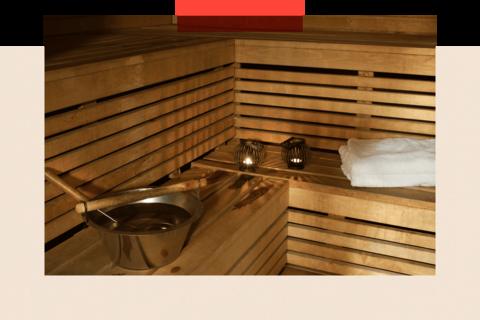
At a sauna in Peckham, south London, young professionals sit on scorching hot, wood-panelled benches, dressed in swimming trunks and bathing suits. Outside, they dunk themselves in metal ice baths. A DJ plays music in the background.

Josh Clarricoats, 33, who owns a food start-up nearby, is a frequent visitor. He meets his business partner there every fortnight for meetings.

"Actually our best creative thinking happens when we're there," he admits. "It's something about sweating, being uncomfortable and the endorphins it releases."

Some professionals might have once felt awkward about sweating in front of colleagues, he concedes - but less so today. "You get sweaty, you see your colleague dripping in sweat, I don't think people really worry about that."

British and American professionals are adopting the Finnish tradition and meeting work colleagues at saunas

Ultra-hot bathing houses have long been part of everyday life in Finland, where they are associated with löyly - the idea that sweat, heat, and steam help you reach a new spiritual state. But in recent years they've trickled into English-speaking countries.

There is a small but growing trend among British and American professionals, in particular, who are adopting the Finnish saunailta tradition, and meeting work colleagues inside saunas.

Last month The Wall Street Journal declared that the sauna has become the "hottest place to network". The idea is that sweat puts everyone on the same level, lowering inhibitions and making it easier to forge relationships.

In Scandinavia, "sauna diplomacy" has long been used to lubricate high-level talks - in the 1960s, Finnish president Urho Kekkonen took the leader of the Soviet Union, Nikita Krushchev, into an all-night sauna to persuade him to allow Finland to repair relations with the West.

Chains of high-end saunas are now springing up in San Francisco and New York too, with members paying as much as $200 (£173) per month to sweat together - in luxury.

There are now more than 400 saunas in the UK, according to the British Sauna Association, a sharp rise from just a few years ago.

Gabrielle Reason, a physiologist and the association's director, has her own surprising view on why. "When you're sweating [in a sauna] … you look an absolute mess but there's something actually very liberating about that, in a world that is very image-focused.

"You smell, you're bright red... You just stop caring what you look like."

It wasn't always this way. We've long had a complicated relationship with sweat - and for years, it was a source of fear.

In medieval England, word spread about a so-called "sweating sickness" that was said to kill its victims within six hours. Some think that Mozart died after contracting the "Picardy sweat", a mysterious illness that made victims drip with perspiration (though the composer's real cause of death remains unclear).

But this fear of sweat was turbocharged in English-speaking countries in the early 20th Century when hygiene brands realised they could use it to sell deodorants, according to Sarah Everts, a chemist and author of The Joy of Sweat.

She says the most "egregious" marketing was aimed at young women. One advert for a deodorant called Mum, published in an American magazine in 1938, urged women to "face the truth about underarm perspiration odour".

It said: "Men do talk about girls behind their backs. Unpopularity often begins with the first hint of underarm odour. This is one fault men can't stand - one fault they can't forgive."

'In a hot yoga class, I'd notice that the first drip of sweat would always come from me,' says Ms Everts

This shame is embedded into Western culture, says Ms Everts, who has long suffered embarrassment about her own clammy skin.

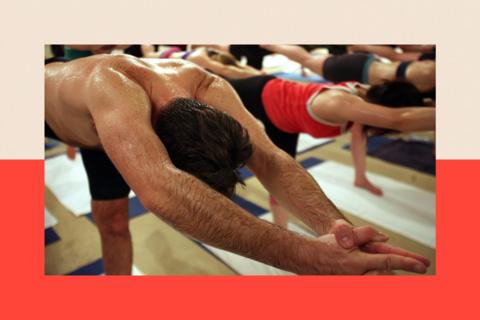
"In a hot yoga class, I'd notice that the first drip of sweat would always come from me," she says. "And I started to think, 'this is a space where I'm supposed to be sweating, and yet I'm mortified'."

But in recent years, that shame has started to fritter away - at least in some quarters.

The new mood is driven in part by the beauty industry and its new mantra: embrace your perspiration.

Back in 2020, the business magazine Forbes described public sweatiness as the "hottest and coolest fashion trend", whilst Vogue Magazine has run photo features on the charm of a sweaty face, known as "post-gym skin".

Dove, the brand owned by Unilever, launched a marketing campaign in 2023 urging customers to post photographs of their sweaty armpits under the hashtag "Free the Pits".

Remi Bader, a TikTok beauty influencer with more than two million followers, who partnered with them, said in a promotional interview: "I'm very, very open with my followers about how I'm very sweaty. It's so normal."

'I'm very, very open with my followers about how I'm very sweaty. It's so normal,' said Remi Bader

And what started as niche or a marketing ploy may well have filtered down to the rest of us.

Zoe Nicols, a mobile beauty therapist and former salon owner in Dorset, says she's had customers asking for a "sweaty makeup" look. She calls it a new "Sweaty Hot Girl aesthetic … you want to look like you've just done a hot yoga class or stepped out of the sauna."

But Ms Everts is more sceptical. Whilst it's "wonderful" that people are speaking more positively about their bodies, in her view the trend has been hijacked by the personal hygiene industry for commercial gain.

"It's the next generation of these marketing strategies," she says. "Instead of being like, 'You smell - and that sucks', they say, 'you smell - but we all smell, here's a product that is the solution to that problem'.

"It's a little egregious to be capitalising on the body positivity cultural trend."

There has been much discussion about possible health benefits of sweating - spas offer services promising to "sweat out toxins," using steam, heat, and infrared light. The trend has taken off on social media too, though some of the claims are more reliable than others.

Scientists are sceptical of the idea that you can remove a meaningful amount of "toxins" from your blood via sweating, however.

"I haven't seen any strong empirical evidence," says Davide Filingeri, a physiology professor at the University of Southampton.

Ms Everts is more blunt: "It's completely bananas."

But perspiration is of course beneficial in a very basic way: it cools us down.

Dr Adil Sheraz, a dermatologist at the Royal Free NHS Trust, says the most common form of sweat - eccrine sweat - does a good job of regulating body temperature.

It comes from tiny glands - each person has between two and five million of them - then evaporates from our skin, lowering our temperature.

Ms Everts has traced the benefits of sweating to prehistoric times, when it allowed early humans to work vigorously for long periods in the sun. "Evolutionary biologists point to sweat as one of the things that makes our species unique," says Ms Everts.

"It's an enormous superpower."

Hidden away from all of this is a group for whom sweating can feel like anything but a superpower. Those are people with a medical condition called hyperhidrosis - which causes excessive sweating, even when there's no obvious cause.

It is thought to affect somewhere between one and five percent of people, but has only recently pierced public consciousness.

Doctors say it's not dangerous but it can be distressing.

Melissa, who did not want to share her surname, first noticed the symptoms in childhood. "My hands and feet were constantly sweaty, even when it wasn't hot or nervous," she recalls.

"Other children could hold hands or play without thinking about it, but I'd always be aware of my slippery palms and damp socks."

Chrissy Teigen previously wrote on Instagram: 'Botoxed my armpits. Truly best move I have ever made. I can wear silk again without soaking'