Sam Fender wins 2025 Mercury Prize for album of the year

The North Shields native has become a hero in Newcastle, where he played three sold-out stadium shows at St James' Park this summer, attracting some 150,000 fans.
Winning the Mercury Prize on home soil was as poetic as it was well-deserved. As Elton John said a couple of years ago: "He's a British rock 'n' roll artist who's the best rock 'n' roll artist there is."
But Fender had downplayed his status as the voice of a generation, or even his hometown.
"People bandy about those terms all the time, and it's ridiculous," he told the LA Times in May.
"Saying that somebody's the voice of a generation - I'm not, honestly. I'm an idiot. I'm just writing about my experiences and the experiences of people I know, and people attach such weight to it."
Speaking backstage, Fender's bandmates joked that he'd celebrate his £25,000 prize with "a pyjama party" at his house.
But the musician said he'd celebrate in a more traditional manner.
"I'm gonna have a beer."

Established in 1992, the Mercury Prize was envisaged as an antidote to the commercially-focused Brit Awards, recognising albums that moved music forwards, without any recourse to fashion or trends.
Of the last 34 winners, 20 have been debuts - from artists including Arctic Monkeys, Suede and Franz Ferdinand.
Many people have mistakenly assumed it is a prize for first albums - but this year's shortlist included only two: Jacob Alon's delicate and beautiful In Limerence, and Joe Webb's Hamstrings and Hurricanes, a jazz album partially influenced by Oasis.
This year saw the ceremony move from London to Newcastle, as part of a wider music industry initiative towards decentralisation.
"Talent is everywhere but opportunity isn't," said Jo Twist, says chief executive of the BPI, which organises the awards.
"So it's only right that we bring these large scale shows (outside London) to show there are opportunities within the music industry without having to move city."
Fender noted the change, saying Newcastle had "always been in an isolated bubble" from the music industry.
"So for it to be recognised is really important. Hopefully it can be the beginning of many other wonderful things."
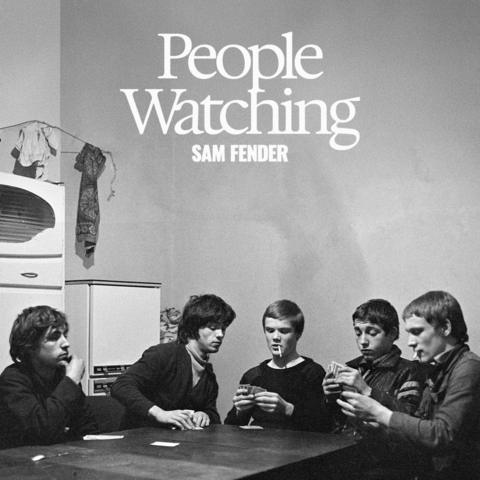
Sam Fender's an unusual proposition. He's a festival headliner with punch-the-sky choruses whose lyrics are overtly political.
On this, his third album, he picks at the scabs of northern working-class life, and rails against a system that leaves families mired in bureaucratic neglect.
Death and loss loom large. The title track was inspired by visiting his mentor and "surrogate mother" Annie Orwin in a palliative care home - and he paints a bleak picture of a "faciilty fallin' to bits / understaffed and overruled by callous hands".
The wistful Crumbling Empire draws parallels between the post-industrial decline of Detroit and Fender's hometown of North Shields, while Rein Me In finds him struggling to shake the ghosts of a failed relationship.
Fender said his ambition for People Watching was to write "11 songs about ordinary people", but this vexed, anxious album ends up being something more substantial - a tribute to human spirit in a time of deprivation and indifference.