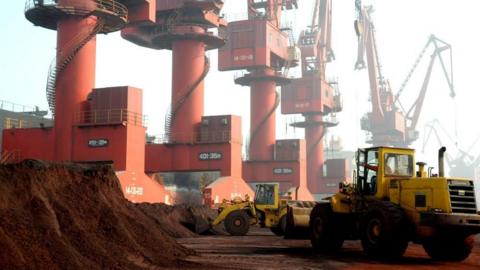
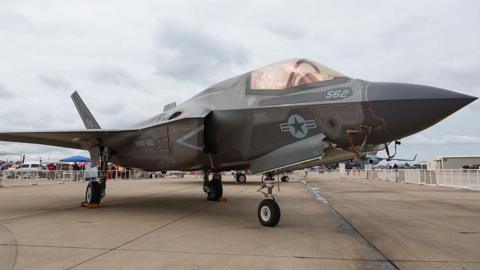
Rare earth minerals are essential for the production of a whole range of technology such as solar panels, electric cars and military equipment.
For example, a single F-35 fighter jet is estimated to need more than 400kg (881.8lb) of rare earths for its stealth coatings, motors, radars and other components.
China's rare earth exports also account for around 70% of the world's supply of metals used for magnets in electric vehicle motors, said Natasha Jha Bhaskar from advisory firm the Newland Global Group.
Beijing has worked hard to gain its dominance of the global rare earth processing capacity, said critical minerals researcher Marina Zhang from the University of Technology Sydney.
The country has nurtured a vast talent pool in the field, while its research and development network is years ahead of its competitors, she added.
While the US and other countries are investing heavily to develop alternatives to China for supplies of rare earths, they are still some way from achieving that goal.
With its own large deposits of rare earths, Australia has been tipped as a potential challenger to China. But its production infrastructure is still underdeveloped, making processing relatively expensive, Ms Zhang said.
"Even if the US and all its allies make processing rare earths a national project, I would say that it will take at least five years to catch up with China."