Wubi News

Thousands in UK sue Johnson & Johnson over talcum powder cancer risks

2025-10-16 14:00:02

In the same year, executives discussed the value of a possible patent for a method that aimed to remove asbestos fibres from talc. At the end of the letter, it added: "We may wish to keep the whole thing confidential rather than allow it to be published in patent form and thus let the whole world know."

Kenvue says these discussions were confidential because a new patent could have been extremely valuable if the new method had been effective. Ultimately, it did not prove to be effective.

Documents cited in the UK lawsuit are also alleged to show that from the early 1970s J&J executives pushed US regulator the Food and Drug Administration (FDA) to accept lower sensitivity standards so that tests did not pick up on small amounts of asbestos fibres.

The claim cites internal documents, which it says show J&J advocated for talc testing standards that tolerated up to 1% asbestos contamination, arguing that more sensitive detection methods were unnecessary.

This, the lawsuit alleges, enabled the company to maintain claims of product purity, misleading regulators and consumers about the presence of asbestos in its talc products.

Kenvue says this misrepresents the context of the document, which references a hypothetical calculation, as requested by the FDA.

Siobhan, like the other claimants in this case, thinks her cancer was caused by use of J&J's baby powder.

The first rounds of treatment helped control the spread of her cancer, but a few months ago Siobhan found another lump in her groin. She is now back in chemotherapy and surgeons say her cancer is no longer operable.

"They knew it was contaminated and still they sold it to new mums and their babies," Siobhan says.

Ovarian cancer is caused by a combination of genetic, internal and external factors.

"The female reproductive tract is open to the external environment so that women can get pregnant," says Prof Christina Fotopoulou, a leading gynaecological oncology surgeon at Imperial College London and a leader in the field of ovarian cancer.

"Cancer is usually an accumulation of mistakes in the reproduction cycle of the cells and so any harmful factors - internal or external - that disrupt the balance of the cells may contribute to these mistakes that eventually may lead to cancer."

Common symptoms of ovarian cancer include persistent bloating, persistent pelvic or abdominal pain, feeling full quickly or an inability to eat, and an increased or urgent need to urinate.

Those who experience such symptoms frequently - more than 12 times a month - should see a doctor. Extreme fatigue, changes in bowel habits like constipation or diarrhoea, and vaginal bleeding after menopause are also signs you should see your GP.
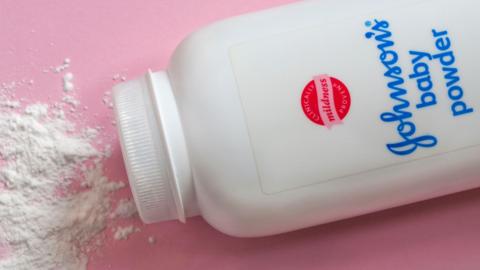
Earlier this month, a court in the US state of Connecticut ordered J&J - and its successor entities - to pay $25m to a man diagnosed with terminal peritoneal mesothelioma after lifelong use of J&J baby powder. The jury in the trial found the pharmaceutical company negligent for selling asbestos-contaminated talc products.

This trial also included deposition testimony from Dr Steve Mann, former director of toxicology at J&J consumer products, who said he had made safety claims without reviewing any test data. Dr Mann conceded that he had received test results showing asbestos in the baby powder but chose not to inform management or regulators.

The judge noted that safer alternatives, such as cornstarch, were available and known to the company, yet J&J continued selling talc-based powder in the US until 2020 and in the UK until three years later.

Following the Connecticut judgement, J&J has denied wrongdoing and is expected to appeal.

J&J has moved its consumer health arm to Kenvue, which said in a statement: "We sympathise deeply with people living with cancer. We understand that they and their families want answers - that's why the facts are so important."

It said the safety of the baby powder was backed by years of testing by "independent and leading laboratories, universities, and health authorities in the UK and around the world".

It said J&J's baby powder "was compliant with any required regulatory standards, did not contain asbestos, and does not cause cancer".

Update: This story has been updated to make clear Kenvue Ltd is a co-defendant in the case and to attribute some of the responses in this article to that company.