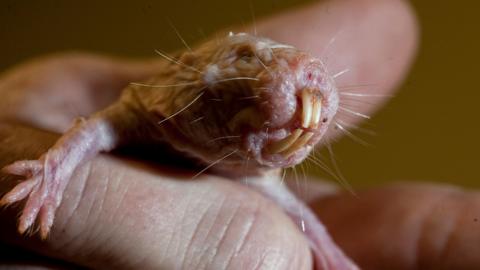
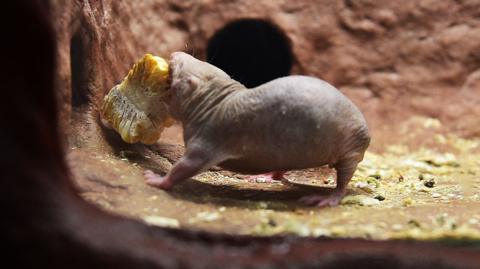
The animals are resistant to cancer, deterioration of the brain and spinal cord, and arthritis, so many scientists want to understand more about how their bodies work.
For this study, led by a team at Tonji University in Shanghai, China, the focus was DNA repair - a natural process in our bodies' cells. When strands of DNA - our genetic building blocks - are damaged, a mechanism is triggered whereby another undamaged strand of DNA is used as a template to repair the break.
The focus of this research was on a particular protein that is involved in that system of damage sensing and repair.
When a cell senses the damage, one of the substances it produces is a protein called c-GAS. That plays several roles, but what was of interest to these scientists is that in humans, it interferes with and hampers the process by which DNA is knitted back together.
Scientists think that this interference could promote cancer and shorten our lifespan.
In naked mole rats though, the researchers found that the exact same protein does the opposite. It helps the body mend strands of DNA and keeps the genetic code in each cell intact.