
Wubi News

'Nothing short of tragic': Inside a family court

2025-10-09 16:00:14

Family court judges oversee disputes relating to children, divorce and the division of money and property following relationship breakdowns.

Most hearings take place in private, with judges governed by family law which aims to protect children by keeping their identities out of the public domain.

Legislation governs which hearings must take place in private - and when judges can sit in public.

Members of the public are normally barred from private family court hearings - but reporters have been allowed to attend since 2009, with judicial heads relaxing the rules earlier this year.
In this case, Judge Parnell heard the couple had split about 10 years ago and that the children had been at the centre of custody disputes for much of their lives.

Following the couple's separation, they initially lived with their mother, but a few years ago, a judge ruled that they should be taken from her care and placed with their father - because she had alienated them from him.

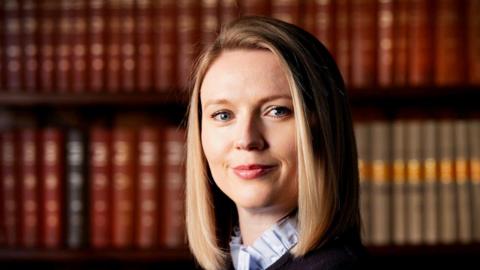
Barrister Charlotte Proudman represented the children's mother

But during the latest stage of the fight, the woman argued that her ex-partner had now alienated the children from her - and they should be moved from his home.

She initially asked for them to be returned to her care, then changed her mind and asked for them to either go into interim council care or to move to her sister's home.

Judge Parnell said a Children and Family Court Advisory and Support Service (Cafcass) social worker should act as the children's guardian during the litigation - and gauge their feelings.

The organisation represents the interests of children and young people in the family court, and independently advises on what is safe for children and in their best interests.

The mother said she was the victim of a "systematic campaign by the father to alienate" the children from her.

Barrister Charlotte Proudman, who represented the woman, suggested that the litigation was "one of the worst parental alienation cases".

Dr Proudman told the judge the children's perception of their mother had become "warped".

The father said there had been "systematic abuse of the children - emotional, physical and mental" by his ex-partner.

She said there was no evidence of this.

He told the judge that the children were "doing great" and said the litigation should end.

"I think they just need closure of some description," he said.

"I am hoping that there will come a point in the future when there is some kind of reconciliation [with their mother]."

He said he wanted the children to be "smiley and happy" and to have a "good relationship" with their mother.

Barrister John Waters, who represented the father but has died since the last hearing in August, told the judge there had been "no alienation".

Judge Parnell said one child had told the Cafcass social worker that their mother kept "going on and on" about the father when they visited her.

The child said they "simply could not cope with it". The other had said they did not "even want to receive letters" from the mother.

Judge Parnell said the social worker's view was that the litigation was putting the children under "interminable pressure" and should end.

He dismissed the mother's applications, decided that the children should stay with their father, and ruled that the litigation should stop.

The judge criticised both parents.

He said the woman had a "strong" and "unusual" personality and concluded that the children had been upset when "unwise and hurtful things were said about the father".

He said the man had not been "careful enough" about things he said in front of the children.

But the judge did not conclude that the man had "conducted a campaign" to stop the children having contact with their mother.

"It seems to me that the fundamental problem in this case is the relationship between the parents," he said.

"Somehow the walls of fear and suspicion and hatred have to come down.

"Until that happens it is extremely difficult to see how the children can move forward."

A Commons' committee report recently said children and families were being "let down by unacceptably long delays" in the family court system.

MPs on the Public Accounts Committee raised concerns, saying the process was "inefficient".

Written evidence to an inquiry highlighted concerns that the process was inefficient and hard to navigate for families.

Family courts were "often described" as "complex, inefficient and difficult to navigate for families" without legal support.

Senior family court barrister Lucy Reed KC responded to that report by describing the family justice system as "disjointed".

Ms Reed is also chair of The Transparency Project, a charity that explains and discusses family law and family courts in England and Wales.

She said many of the points made in the report had been raised nearly a decade ago.

"Whilst there isn't much to quibble about in the conclusions reached, notably missing is any focus on the resource issues that are a key part of the context to those delays and failures," she said.

"If you don't fund a thing properly it ain't gonna work properly."