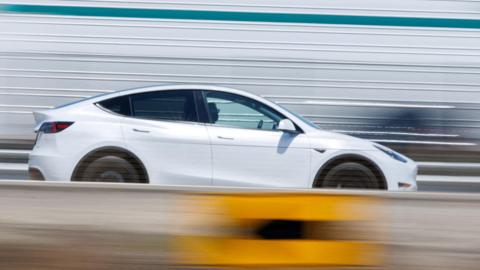
Despite his emphasis on artificial intelligence ventures, Tesla still relies heavily on its core car business, which has been under pressure on multiple fronts.
It faces cuts to US government support for electric cars, competition from Chinese carmakers and consumer backlash earlier this year against Musk's involvement in the Trump administration.
In July, the carmaker reported that its sales fell by 12% in the second quarter to $22.4bn - the biggest drop in at least a decade - after deliveries plunged 14%.
Last week, Tesla was among the car companies to report record sales of electric cars over the past three months. But analysts said the boom was caused by a dash to buy before the end of a government subsidy.
Tesla vehicle prices for US consumers increased by as much as $7,500 (£5,588) this month after a US tax credit for electric vehicles expired at the end of September.
Tesla executives have acknowledged that the end of the tax credit for buyers of electric cars in the US is likely to hurt the business.
The newly released lower-cost models, aimed in part at offsetting the loss of the EV credit, will lack certain features found in other Tesla vehicles.
In the US, the lower-cost, stripped-down versions of its Model Y sport utility vehicle and Model 3 sedan will be priced at $39,990 and $36,990 respectively, according to Tesla's website.
Tesla's last big vehicle launch - the Cybertruck - has yielded lacklustre results, with US sales totalling roughly 52,000 units since deliveries began in 2023, according to Cox Automotive.