Wubi News

Falling pupil numbers see London hit hardest

2025-09-25 21:00:08
There has been a sharp decline in pupil numbers since the "post-millennium baby boom", the report found

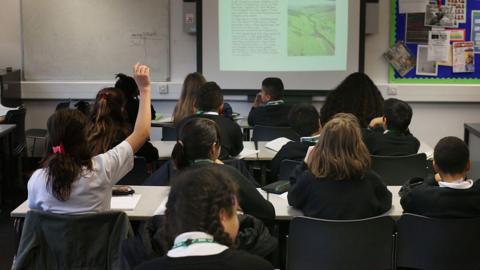
The number of pupils in primary schools in London is continuing to fall sharply as a low birth rate coupled with families moving away from the capital is starting to take effect, a report has found.

Since 2019 there has been a drop of 150,000 pupils according to analysis by the Education Policy Institute (EPI) which predicted a further 400,000 drop of pupils in schools in England by the end of the decade.

Nine of the 10 local authorities seeing the largest drops across the country are in London, it said, with the inner boroughs seeing the biggest change.

Schools are funded on a per-pupil basis meaning falling pupil numbers are a big concern as large declines are associated with school closures.

According to the independent think tank, Westminster saw an almost 16% fall in primary pupil numbers from 2020-21 to 2024-25, while In Southwark, figures have fallen by more than 12% in five years and the number of primary schools has dropped by six.

About 17% of primary pupils in reception in 2012-13 had left the city by Year 6, increasing to 20% for pupils who started reception in 2017-18, the report found.

In order, the 10 local authority areas with the largest falls in primary pupil numbers over the last five years are: Westminster, Lambeth, Southwark, Hackney, Camden, Hammersmith and Fulham, Islington, Merton, Wandsworth, and Redcar and Cleveland in North Yorkshire.

The National Association of Head Teachers (NAHT) said the findings confirmed "what school leaders have been experiencing on the ground".

Its general secretary, Paul Whiteman, said "unpredictable pupil demographic changes are making long-term school place planning increasingly difficult".

"We need a joined-up strategy that puts pupils and communities first, avoiding the temptation to take knee-jerk, reactive decisions that undermine stability.

"Rather than reducing funding or closing schools, we would urge the government to continue to invest and support local authorities to maintain staffing and resources."

Earlier this year, former education secretary Conservative MP Damian Hinds called for school funding to no longer be judged on a per-pupil basis because of falling rolls.

He said the decline in pupils meant the per-pupil basis was no longer a good reflection of whether funding was increasing or decreasing.

A Department of Education spokesperson said it recognised the "pressures caused by demographic changes".

"Our system is designed to give schools more certainty over funding levels so they can plan ahead.

"Per-pupil funding for schools is currently at record levels, increasing to £69.5bn by 2028-29.

"As part of our wider work to give children the best start in life, we have awarded 300 primary schools £37 million to repurpose their spare space, with schools now providing over 5,000 new childcare places, as part of our school-based nurseries roll out."