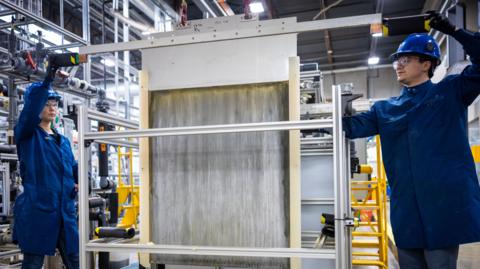
An activity centre for babies and toddlers, an Indian restaurant, an indoor golf centre – and a mini experimental steel plant. These businesses are among those that make up a small retail and industrial estate in the city of Woburn, Massachusetts.
"People are dropping off their kids. That kind of shows you an extreme example of what the future of steel looks like," says Adam Rauwerdink, vice president of business development at US-based green steel start-up, Boston Metal. "You can be making steel and sharing a parking lot with a daycare."
Boston Metal has come up with a way of using electricity to remove oxides and other contaminants from iron ore, which is the substance you have to mine from the Earth before you can make new steel.
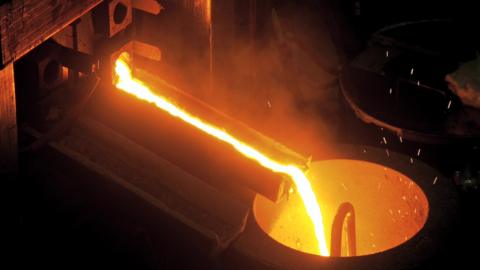
The process involves distributing the ore within an electrolyte and then using electricity to heat this mixture to 1,600C. Molten iron then separates from impurities and can be tapped off.
Traditionally, extracting that all-important iron from ores requires blast furnaces that run on fossil fuels. But the iron and steel industry are responsible for 11% of global emissions – a huge amount, equivalent to all the world's private cars and vans – and so now a race is on to find greener ways of producing these important metals.