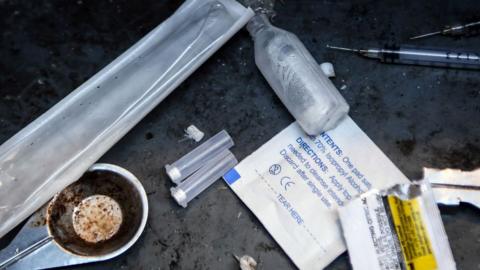
Annemarie Ward of Faces and Voices of Recovery UK agreed that harm reduction should be part of the mix but said the balance needed to tilt towards rehabilitation.
"When government ministers talk about treatment in Scotland, what they're talking about is harm reduction," she said.
"When the general public hears the word treatment, they're thinking detox, rehab, people getting on with their lives."
Ms Ward also wants a shift away from NHS provision of drugs services in favour of third sector provision of rehabilitation and recovery.
Her charity advocates for such solutions but does not provide them directly and does not receive government funding.
"Our treatment system is delivered through the public sector, which means it's incredibly bureaucratic. So you can't just walk into a service and get seen that day, for instance, the way you can in England."
Ms Horsburgh and Ms Ward may have different priorities for tackling the crisis but both agree that it is almost certainly about to get worse.
"Nitazenes are a whole new ball game," warns Ms Ward.
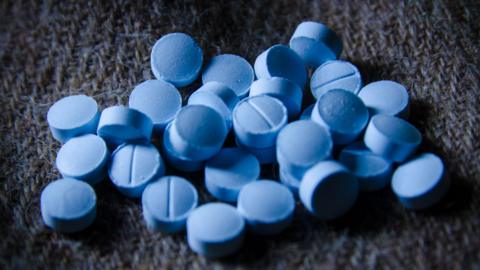
"These are the synthetic opioids that are 100 times stronger than your average hit of heroin, and they're also ending up in the coke supply."
Cocaine deaths in Scotland reached a record high of 479 in 2023 and remained at exactly the same level in 2024.
Nitazenes are not sought out by users but are used by dealers to adulterate other drugs.
They were implicated in 76 deaths in 2024, three times as high as in 2023.
But Ms Ward predicts an exponential rise this year "unless we start to help people get clean and sober again."
If she is right, Scotland has not yet got to grips with this emergency despite this year's fall.
The causes of the drug deaths crisis are multiple and complex.
But the fear is that they are producing a cumulative and compounding effect from which it is proving almost impossible to escape.