On 22 August a French official overseeing the loan defended the move, saying the artefact was not too fragile to transport.
Philippe Bélaval said no decision had yet been taken on how to transport the tapestry, but highlighted a study from earlier this year that had made detailed recommendations about handling and transport.
"This study absolutely does not state that this tapestry is untransportable," Belaval said, quoted by the AFP news agency. He did not reveal the authors of the study or their conclusions.
Cecile Binet, a regional museum adviser for Normandy, said in a YouTube post in February this year that moving the tapestry long distances would be "a risk to its conservation", adding that it was "too fragile".
The huge embroidery - which is widely believed to have been created in Kent - will be displayed in London from next autumn until July 2027.
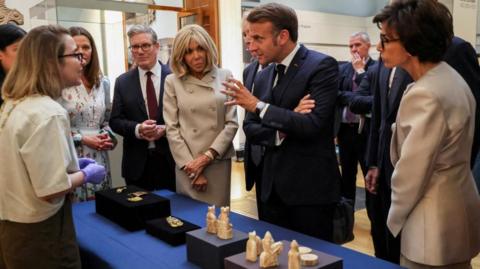
In exchange, treasures including artefacts from the Anglo-Saxon burial mounds at Sutton Hoo and the 12th Century Lewis chess pieces will travel to museums in Normandy.
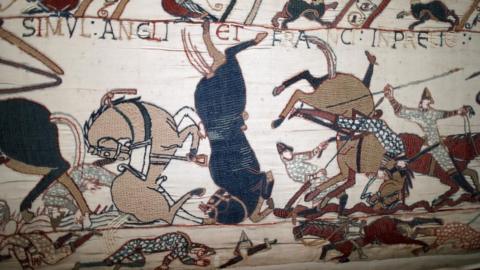
The Bayeux Tapestry, which dates back to the 11th Century, charts a contested time in Anglo-French relations, as Anglo Saxon dominance was replaced by Norman rule.
Although the final part of the embroidery is missing, it ends with the Anglo Saxons fleeing at the end of the Battle of Hastings in 1066.
Its 58 scenes, 626 characters and 202 horses give a unique account of the medieval period in Normandy and England, revealing not just information about military traditions but also the precious details of daily life.