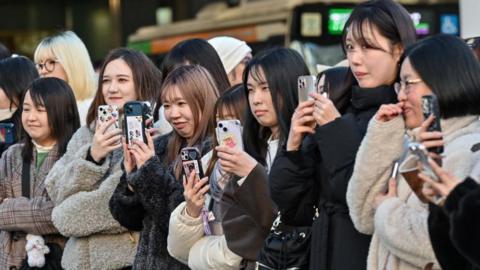
"The two hour limit... is merely a guideline... to encourage citizens," Toyoake Mayor Masafumi Koki said in a statement.
"This does not mean the city will limit its residents' rights or impose duties," he said,
"Rather, I hope this serves as an opportunity for each family to think about and discuss the time spent on smartphones as well as the time of day the devices are used."
Smartphone use during non-leisure activities, such as watching videos while cooking or exercising, online learning and practicing for an e-sports tournament, will not count towards the two hours, he added.
Koki said he recognised smartphones were "useful and indispensable in daily life" but pointed out that some students were missing school because they refused to leave home without their phone.
Adults were also sacrificing sleep or time with families so they could keep scrolling on their phones and tablets, the mayor said.
More than 120 residents called and emailed local city authorities during a consultation period, according to Japanese news outlet Mainichi, with the majority (80%) not happy about the proposal. Some, however, showed support for the bill.
The proposal suggests that primary school students should stop using devices by 21:00 while older students and adults should stop by 22:00.
Many took to social media to air their grievances about the proposal, with one user saying you "cannot even read a book or watch a movie" in two hours, according to the Japan Times.