
Wubi News

What is behind the passion of Love Island USA's Nigerian fanbase?

2025-08-25 16:00:11
Identity became a heated issue for fans of the show this year
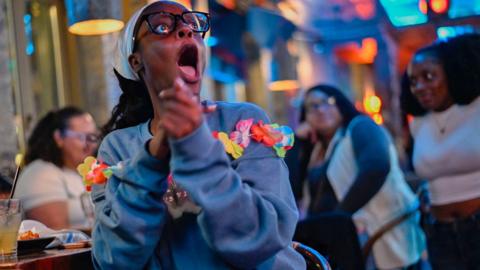
Love Island USA watch party goers worldwide lap of the show's drama
Huda Mustafa is the most-followed islander from this season of Love Island USA

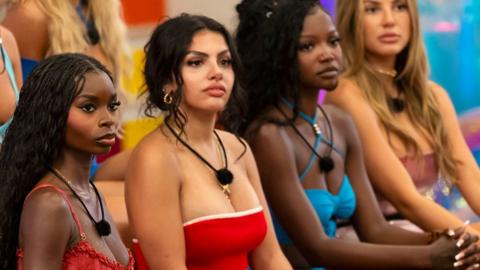
On the show's starting line-up, there were four girls alongside Huda Mustafa, who is of Arab heritage.

Chelley Bissainthe and Olandria Carthen were the only black female islanders in that initial line-up and faced a lot of racist comments. When other black women did not support them, some saw it as a betrayal.

Ms Olamiposi says she was dubbed "anti-black" because she supported Mustafa.

"I was bamboozled," she says, her eyes wide with shock.

Dr Osefo says these cultural differences are rooted in distinct historical experiences.

"I think that when you come from a predominantly black nation, race is not something that's at the forefront of your mind," she says, explaining that black people in America do not have the luxury of thinking like that.

The Nigerian fandom is also shaped by the more colourful use of language, the academic says.

"There's a saying that if you hear Nigerians talking, you'd think they're arguing, because we're so passionate.

"Even in how we instruct people. Your mum in the US might say: 'You need to make your bed.' A Nigerian mum might say: 'Do you want to live your life as a pauper forever?' It's deeper and that passion translates to social media."

For Mr Clarke this underlines how deeply reality TV has become embedded in Nigerian culture.

"It's part of the fabric of society now. In its best form, reality TV reflects the audience and reflects the desires and hopes of the people that are watching it."

Watch parties are expected - some virtually - for the viewing of the Love Island USA Reunion, due to stream later on Monday.

"I want everybody to 'stand on business', '10 toes down'," says Ms Olamiposi - using two catchphrases that went viral during this season's Love Island USA.

In essence they convey the message: mean what you say and say what you mean.

If this happens, she, like most Nigerians, will be lapping up the "wahala".