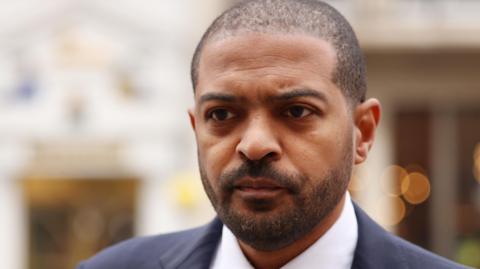
Clarke described the judgement as "disappointing", adding: "I have never claimed to be perfect. But I am not the person described in these articles."
The judgement found the meaning of each of the newspaper's articles was "substantially true".
Mrs Justice Steyn added: "I have accepted some of Mr Clarke's evidence... but overall I find that he was not a credible or reliable witness."
During a High Court defamation trial earlier this year, Clarke's legal team said accusations that he was a "serial abuser of women" were false, and argued he was the victim of an "unlawful conspiracy".
The Guardian defended what it said was a "careful and thorough investigation conducted conscientiously" by its journalists.
During the six-week trial, which saw Clarke sue the publisher over seven articles and a podcast, more than a dozen women testified that they had personally experienced misconduct by the actor and director.
Clarke, 49, gave evidence over more than three days, and denied that he behaved sexually inappropriately with the women.
The judge said Clarke's conspiracy claim did not have a "proper foundation", and was "born of necessity, in the face of the large body of witnesses giving evidence against him".
"There has been no conspiracy to lie," she continued. "In the absence of a conspiracy, Mr Clarke's case that more than 20 witnesses - none of whom are parties or have a stake in this case, as he does - have come to court to lie is inherently implausible."
The judgement said it was "clear that women have been speaking about their experiences of working with Mr Clarke for many years".
It said that Bafta's announcement in March 2021 that Clarke would receive an award "triggered those who were concerned about his behaviour to act, out of concern that it would enhance his power within the industry and so enable him to continue misbehaving".