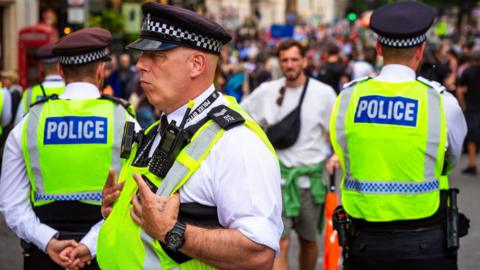
The EHRC said it recognised the potential benefits of the technology in policing but was concerned that the Met's current policy breached key human rights protections and posed a threat to human rights.
These include the rights to privacy, freedom of expression, and freedom of assembly, as set out in the European Convention on Human Rights.
Last month, the Met said the tech had enable it to arrest suspected offenders including alleged paedophiles, rapists and violent robbers, 773 of whom had been charged or a cautioned.
The Met has announced plans to use the technology to police major events such as Notting Hill Carnival - a proposal which has proved divisive.
Civil rights groups and privacy campaigners have consistently opposed LFRT, saying it invades people's privacy, and carries an unacceptable risk of misidentification.
The Met has defended its use, however, saying it helps cut crime at a time when "money is tight."
Currently, there is no specific domestic legislation regulating police use of live facial recognition tech.